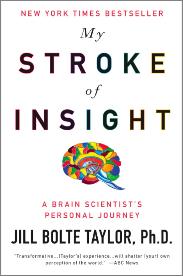
Book Review of My Stroke of Insight by Jill Bolte Taylor, PhD
published in The Art of Teaching
reviewed by Gail Bursch, Belmont University School of Physical Therapy
In the midst of beginning another hectic school year, take a deep breath and a moment to imagine the consequences of suddenly having a stroke or traumatic brain injury. Consider the misfortune of a successful neuroscientist, who taught Harvard medical students and conducted research at the Brain Bank, having a massive stroke at the age of 37. After surviving a massive bleed in the left hemisphere of her brain, Dr. Jill Taylor wondered if she would be able to speak again, to walk again and would they take her PhD away?
The ways in which Jill connected with the outside world for help during the four hours her brain was hemorrhaging is an amazing story. Because the left hemisphere contains the speech and language centers, she could not speak intelligibly nor recognize phone numbers. Each normal function shut down one by one as the bleed progressed. The curious neuroscientist in her monitored the details; overcoming the fear and desire to succumb to a peaceful death. Jill described the loss of her ‘brain chatter’, which refers to the left brain monitoring time and details, categorizing everything so that we can make sense of the world. With the left brain injured, her right brain became dominant resulting in silent euphoria and feeling at one with the universe.
Category Archives: Inman College of Health Sciences
Karen and Jemimah
Dr. Ruby Dunlap’s Uganda Fulbright Blog
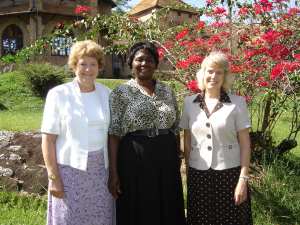 Karen Drake is a tall, strong woman whose primary home is now Minneapolis but who has spent most of her life on foreign missions of one kind or another. She lived with her parents in Japan until she was 17 years old, becoming fluent in all things Japanese.
Justice
Dr. Ruby Dunlap’s Uganda Fulbright Blog
“Do not,” warned Ben, the security specialist at the U.S. embassy, “go toward a crowd of people. Move away as quickly as you can when a crowd starts to gather.” Uganda is among those countries distinguished by regular occurrences of mob justice within its borders.
A couple of U.S. college students in their study abroad semester at Uganda Christian University, perhaps motivated by curiosity mixed with the natural tendency to behave in ways opposite from what one has been told, went towards a crowd instead of away from it and witnessed the beating to death of a man by a mob.
The day after we arrived, the local paper had a story about a landlord who was first hacked and then burned to death by irate tenants who had heard he was thinking of selling his property. It happens here regularly enough, “mob justice,” a category of justice within this society. Litigation is rare among those Ugandans who have cheaper and more effective ways of retribution at their disposal.
Taking Care of Business
Dr. Ruby Dunlap’s Uganda Fulbright Blog
The circulatory system of Kampala is an atherosclerotic mesh of streets most of which wind through the vast slums which, if reports are correct, characterize the cities of the so-called developing parts of this planet. There are sections of privileged residences and businesses behind fortresses of thickly spiked walls, gates and hired guards.
The U.S. embassy is one of these, a massive structure of multiple barriers and checks. Our embassy driver had never left his vehicle but hired nationals guarding the entrance still lifted the hood and ran a mirror underneath it to check for any discourtesies before allowing it to proceed through yet more checks and barriers when we arrived at the embassy around 9 am Wednesday morning.
We walked through a metal detector. I had to leave my three memory sticks and calculator at a front desk; no electronic devices of any kind are allowed to be carried into the embassy. After that, we had to leave our passports with a young Marine who sat behind thick glass at the final check. We were met by Dorothy, the Ugandan national who works as a cultural affairs attaché and who had facilitated the orientation for the Ugandan Fulbrighters in Washington in June.
Congressman Cooper’s Chief of Staff visits College
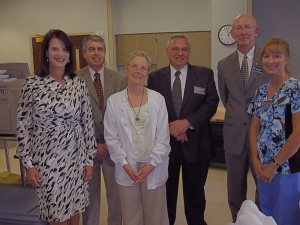 Lisa Quigley, Chief of Staff for Congressman Jim Cooper, recently visited the College. Pictured here from left to right are Ms. Quigley; Christopher Coates, President & CEO of American Seniors Foundation; Beth Williams, Simulation Assistant; Jack Williams, Dean of the College; Phil Johnston, Dean of the School of Pharmacy; and Joy Cook, Adjunct Professor of Nursing.
PT Student Develops Equipment Innovations for Amputees
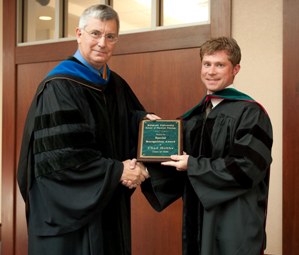 Dr. Chad Hobbs, an August 2009 Physical Therapy graduate, received a Special Recognition award last week for his work in developing equipment innovations for amputees. As part of his clinical education experience, Hobbs worked at the Walter Reed Army Medical Center Amputee Center in Washington, D.C., where he created a glove for an amputee who had lost a portion of his hand and elliptical foot plates for lower extremity amputees.
In his recognition at the School of Physical Therapy Hooding Ceremony, Professor and Associate Dean of Physical Therapy Dr. John Halle introduced Hobbs, noting, “As an inventor and entrepreneur, he exhibits a collaborative and humble spirit that facilitates working with other health care providers and patients. He has developed collaborative devices with two clinical instructors, a faculty member and with patients. He has eight products that are in the final stages for marketing and four more products in development. Additionally, he has taken his products and combined them with existing health care products to develop a company that can meet patients’ needs with ‘one stop shopping’ at a reduced cost.”
Water
Dr. Ruby Dunlap’s Uganda Fulbright Blog
“Monkeys live at the top of the hill,” university staff told us. “They are shy, not like baboons. At the top of the hill is your best chance of seeing them.” Camera in hand, I determined this morning to go photo-hunting for the resident monkeys. I tried several roads which went left and up but always dead-ended in someone’s driveway.
Finally, I came across a young man getting off his motorcycle in one of the driveways. Just beyond the driveway was a high gated area around several huge water tanks. “Good morning,” I said, “I’m Dr. Ruby Dunlap. I’m trying to find the way to the top of the hill.” (I wear the “Dr.” with egalitarian American lightness but Ugandans value titles as much as they value conservative attire and one potentially offends by being too casual with either.)
One Chance Firsts
Dr. Ruby Dunlap’s Uganda Fulbright Blog
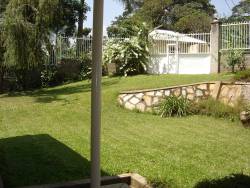 The hour of reckoning, the day of doom, must elicit a look on the human face which is among those things transcending place or time. We arrived at Uganda Christian University at the end of the first week of final exams and just before the beginning of the second week when pen to paper or mouse to screen stand in as prototypes for that Apocalyptic opening of books.
Round-abouts
Dr. Ruby Dunlap’s Uganda Fulbright Blog
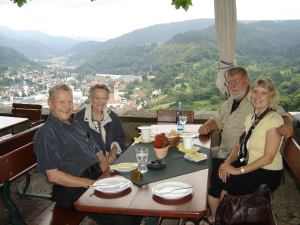 That Ireland has no snakes is hardly more remarkable than that Germany has few enough flies and mosquitoes to make the leaving open of windows and doors during pleasant weather a practical option. The meeting of wind with curtain, the outdoor garden with indoor polished wood unimpeded by inelegant mesh screens, is one of the pleasures of being in Germany, ranking behind German bread but, for me anyhow, considerably before the autobahn.
Belmont Nursing Grads Attain 100% Pass Rate on National Licensure Exam
One-hundred percent of May 2009 graduates from our School of Nursing have passed the national licensure examination for Registered Nurses, once again demonstrating the high quality of nursing education provided at Belmont.
37 Belmont students were among the 66,531 US educated candidates who have taken the National Council Licensure Exam for Registered Nurses (NCLEX-RN) for the first time to date in 2009. The NCLEX-RN examination assesses the competencies of RN’s upon entry into practice. The 100 percent pass rate for Belmont graduates compares to this year’s national pass rate of 89.5 percent for this group.
The story before the story
Dr. Ruby Dunlap’s Uganda Fulbright Blog
This is the story before the story. The story will begin when a door opens and I take my first breath of African air after a 43 year absence. I imagine I will be too tired to process much at that moment but that will be the real beginning. The beginning of what? We shall see. This blog exists so I can share the “what” with you as it unfolds. This first story is a chance for you to take a look at the program before the curtain opens.
As a child, I could hardly imagine a life outside Africa. Normal for me varied between the hot, scrubby bush of Somalia and the lush, green, high country of Tanzania where I went to school for awhile.
These normals were spiked with yearly visits to Nairobi. The Nairobi of my memory was a city of well-tended gardens, double-decker buses, fragrant open-air markets, and crisply uniformed officers directing traffic with white gloved efficiency. As a bush child, Nairobi was the closest thing to paradise I knew. As that child all grown up, Nairobi’s sad decline has been reported to me by people different enough for me to believe it. I don’t want it to be true. I don’t want any of the tragic stories out of Africa to be true.
Nursing Professor Selected as Fulbright Scholar to Uganda
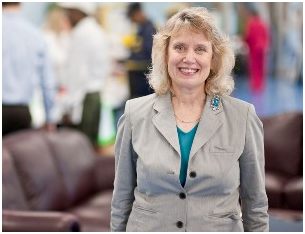 Dr. Ruby Dunlap, associate professor in the School of Nursing, was recently selected as a 2009-10 U.S. Fulbright Scholar for Sub-Saharan Africa, specifically Uganda. Dunlap will be a guest lecturer in nursing at Uganda Christian University which is located 23 kilometers outside of Kampala, Uganda. She will also be conducting research on how standards of nursing are adapted to austere conditions.
“It is deeply humbling to be given this kind of trust,” Dunlap said. “I’m looking forward to collaborating in discovery and service with colleagues in Uganda and hope to represent Belmont and the Nashville community well in this assignment.”
PT Faculty Awarded by Susan G. Komen Foundation
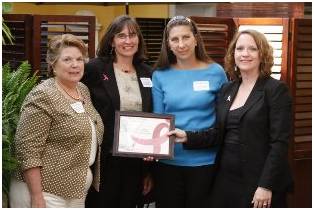 Belmont Physical Therapy faculty Renee Brown, PT, PhD, worked with two Vanderbilt faculty members on a project which was awarded $75,000 from the Susan G Komen Foundation, Greater Nashville. The project is titled “Transitioning from cancer patient to survivor: physical and functional considerations after breast cancer for primary care providers and survivors.” This project will focus on educating primary care providers about long term physical and functional problems after breast cancer as well as providing them with education materials to provide their patients.
Social Work Students, Faculty Attend National Conference
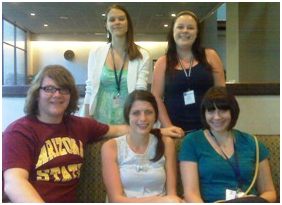 Social work majors Michelle Barnett, Elizabeth Brown, Claire Godwin, Whitney Harold and Jimmy Smith joined their professors to attend the Association of Baccalaureate Program Directors annual meeting in Phoenix, Arizona. The conference theme was “The Future is Now,” which showcased the infusion of innovation and technology in social work practice. In addition to serving as conference volunteers, students attended a variety of workshops and met with dozens of graduate program representatives.
Frist Advocates for ‘Hope Through Healing Hands’
 Former Senate Majority Leader Bill Frist, M.D., made a special appearance on campus recently to speak on “Hope Through Healing Hands,” his global health initiative that strives to change the world through raising awareness and taking action against global disease, extreme poverty and other health-related issues.
Frist’s talk focused on his medical mission work in Africa over the past decade and how that work inspired him to found Hope Through Healing Hands, an organization that seeks to use health “as a currency for peace.” He spoke of Lui, Sudan, a village he’s visited frequently that’s located 500 miles west of the Nile.
“What started as American medical volunteers operating on a single patient in an abandoned school house grew to a hospital that now sees 40,000 patients each year from hundreds of miles around with 60 Sudanese workers… People say in Africa there’s no hope, there’s nothing we can do. But we can make a difference.”
Frist advocated that Americans’ work in Africa is not only the morally right thing to do, but it also makes this nation safer. “You don’t go to war with someone who has saved the life of your child.”
Quoting from Rev. Martin Luther King, Jr., Frist concluded by reminding his audience of the inextricable connections that exist throughout the worldwide community. “We are caught in an inescapable network of mutuality, tied in a single garment of destiny. Whatever affects one directly, affects all indirectly.”
For more information, visit www.hopethroughhealinghands.org.
Reflecting on Cambodia from Laos
Cambodia Mission Trip 2009
 Cambodia meant many things; a new land, a new culture, and a new people. The part I will miss most deeply is the relationships formed with the many people with whom we had the chance to become acquainted and even build meaningful friendships. Sunday was our last real chance to say goodbye to those who helped make the trip a memorable one. At church on Sunday morning the congregation honoured the Belmont group by presenting us with beautiful Cambodian silk scarves not only to commemorate our time in Cambodia but also to commend the work we’d performed. The irony of the situation was that the exchange occurred inversely; those truly deserved of commendation were the ones who accepted us into their lives whole heartedly and showed us an unforgettable time.
After church we had some free time to roam about the city, tie up any loose ends, or just relax. Emily and I decided to sneak a gander at the National Museum. The short tuk-tuk ride was well worth it – I’ll definitely miss those little motorized wagons, the put-put of the engine, the wind (or dust) in your hair, and the many sites captured en route. Once we had made it to the museum Bounchanh, who had hitched a ride to Art Street, hopped out of the tuk-tuk and promptly rolled his ankle leaving a doozy of a bruisy in its wake. The museum was rather unassuming from the outside; an old temple with a well-manicured garden housed the treasures within. Once inside, it was evident that space was at a premium because there were dozens of statues of Buddha, essentially sitting in one another’s laps. Upon further inspection we saw many bas reliefs, statues, and various other priceless artifacts, the majority of which had been salvaged from the temples at Siem Reap. In the courtyard were four placid fish ponds, stocked to the brim with an assortment of colourful fish. The trip was capped with a walk to the souvenir stand where we picked up a couple of iced coffees, our newfound obsession, and then it was back to the hotel to prepare for the pot-luck dinner.
Experiencing Cambodia
Cambodia Mission Trip 2009
 Waking up early to exercise in Cambodia has become one of the most enjoyable parts of the trip. People are able to participate in the morning routine of running, walking, dancing to music, or any other type of exercise. Furthermore, it helps everyone to get ready for the day. This morning I had the opportunity to see monkeys as they ran around looking for food.
Today I was in the operating room with Emily, and we were able to watch doctors perform a thyroidectomy. This surgery helped me review the concepts I have learned from my nursing classes this past semester, such as the risk of people developing hypothyroidism after their thyroid is removed. The doctors were very helpful in explaining the most important precautions for the particular patient too, such as hemorrhaging as a complication of HIV and multiple surgeries. The second surgery involved the doctors removing a gallbladder. For this surgery, I inserted my first NG (nasogastric tube) tube! Even though we left before the gallbladder was removed, participating in the preoperative care of the patient was exciting.
It is hard to believe that our time in Cambodia is near. We have all learned a lot—culturally, socially, and educationally. This trip is a memory we will never forget!
Same Same, but different!
Cambodia Mission Trip 2009
 I sit in Seoul Korea on our way back home and finally have the time to write my blog entry. We are all doing well and are looking forward to being reunited with our families and friends.
In Cambodia there is a saying “Same, same, but different”. The Khmer word for different is psame psame, but the “p” is rather silent. When we say “samething”, most Khmer people hear same same which means different. When we here them say psame psame, we think they are saying “samething”. So when you see all of us wearing our “same, same, but different” t-shirts, you will be able to laugh. Cambodia after 5 years is the same same, but different. The streets are getting a facelift and buildings are going up, but the people are still the same on the streets. Children continue to be homeless and poor without appropriate healthcare, hygeine or nutrition. My blog about our village trip that we took on Saturday.
Several people donated money for us to do some good while here and good we did. Several of us made a trip to the Orrusey Market which was quite the experience. Thankfully we took 3 of our Cambodian friends with us to help with translation. We bought school supplies (807 writing books, pencils, rulers, sharpener, eraser and bags), shoes, large book bags for honor students, toothbrushes, tooth paste and more for 269 children in a village in Kandal province about 1 hour or so outside of Phnom Penh city. Additionally, we brought rice, soy and fish sauce for the poorest of families that was to be determined by the school director. We packed our supplies and our lunch and loaded the bus with 17 of us plus several of our Cambodian friends from church and the hospital.
One Week at the Hospital Ends
Cambodia Mission Trip 2009
 Today marked the completion of our first full week at the hospital. Sadly, it is also our last day at the hospital. Nursing and pharmacy students both had a very busy week ranging from HIV home visits and mobile clinics to nursing check-offs and genocide museums. It has been a challenging week both physically and emotionally.
At the Choeung Ek Genocide Museum, skulls of victims were stored in a pagoda-like monument. Victims included children and adults. I was prepared to see pits where victims were buried in mass graves. However, I was not prepared to see bones that were still scattered on the ground and clothes of victims strewn about the pits. It was hard to fathom and digest the atrocities that occurred here and amazing that the Cambodian people were able to recover.
Our time at the hospital came to an end but we still have a few activities planned for the weekend. On Saturday we will visit a small village outside the city of Phnom Penh. We will donate school supplies to students and food to poor families. The school in the village does not have a functioning bathroom. The current bathroom has been broken for some time, but with the donation from Belmont the school will now have three functioning stalls. The well, which was a source of clean water for the school, has been neglected and required repairs. This well will be functional again thanks to the donation from Belmont.
Birthday in Phnom Penh
Cambodia Mission Trip 2009
 Today we had a long traveling morning. We got on the bus at 8:30am from Siem Reap and arrived in Phnom Penh around 2:30pm. On the bus, we had a nice little game of eye spy that included almost everyone in the group. It was a creative way of spicing up the 6 hour journey. Overall, sleeping was the activity of choice on the bus. When we arrived at Phnom Penh, we checked back into our hotel and resettled in our rooms. We had a small break and then met up for our daily group meeting.
Everyone loved one of the restaurants that we went to the first day we arrived in Phnom Penh, so we hit up that restaurant again! I enjoyed a nice vegetarian plate where I made my own tacos. Then, the fun began!! The students, including Mrs. Dryden, went out to a dance club! It was interesting because they played ALL American music. The Khmer way of dancing is to use your hands and form worm-like motions with them, so it was a surpise to not see that. Some of the people from the hospital were also there, so it was good to be able to get to know them better. Since it was my birthday the previous day, the band played a song for me! So, Billy and I went out on the dance floor and did a little jig. Personally, I think everyone loved our dance moves. We stayed at the dance club until 11:30ish, and then we all went back to the hotel and crashed.
 Overall, I am really enjoying the trip. I’m excited to work in the hospital this coming week and to meet more of the staff. Everyone is so friendly and welcoming. Even at church, some of the nurses that I have met will invite us to sit with them! This week should be exciting!
-Emily-
One in a Million
Cambodia Mission Trip 2009
 What an amazing couple of days. We left the hospital yesterday afternoon, went to the ‘market” and shopped for the children at the Orphanage. At their request, we bought underwear, salt, sugar, fans and cooking oil. Then we made a stop to buy fruit, getting two “hairy eyeballs” for each child. The children are happy, cared for and well educated. We spent time playing games, singing, and also, visiting the library and their rooms. (Some were a little reluctant for us to see their room but with 5 girls to a room you can imagine!) What beautiful kids, and what a great concert they gave us. The hard part was leaving, they begged us to stay, ‘please come tomorrow’ and ran after the Tuk-Tuk as we went out of the gate; pictures that will remain with us for a long time. These are the fortunate children of Cambodia-they are safe and get an education.
Today was a trip to the ‘killing fields”. To comprehend that much cruelty is beyond my capacity. The great learning from the trip: understanding the people we are working with at the hospital. They lived through Pol Pot and have moved on with their life, now serving others on a daily basis. As I taught the supervisor class today, I had a whole new understanding of their job, their life and who they are as a people.
OBTW…TICB*
Cambodia Mission Trip 2009
 Tuesday was the start of another wonderful and exciting day for each of us in Cambodia. Mrs. Dryden, Emily P., Brandon, and I rose a little earlier than the others so that we could meet the mobile clinic group at the hospital. After a few phone calls, tough communication with the nurses and staff, and some walking around, we were finally able to find out where we were supposed to be. We did have a small problem with seating though…a five person truck was supposed to hold seven of us. However, we were able to make it work! We traveled to a small and very poor village outside of Phnom Penh to provide medical care for those unable to come to the hospital. It was a new experience for the three of us, especially since most of our patients were children. Emily and I took vital signs, while Paul handled the pharmaceutical aspect of the visit. He even caught a few mistakes that were made, which shows the great training and education he has already received.
At the hospital, our instructors and student nurses assisted with check-offs. This is where all the nurses have to come in and take tests in several different areas; the subjects included blood cultures, oral care, and oxygen tubing care. Though it was a little hard to understand the nurses during the oral part of the tests, it was very exciting to see that they knew how to perform these tasks. It is obvious that this hospital is making great progress, and so many of the nurses truly know what they are doing.
Home Visits and Khmer Rouge History
Cambodia Mission Trip 2009
In Cambodia some major health care issues are HIV/AIDS, TB, and diabetes. Today students of nursing and pharmacy left the hospital to go on home visits for HIV patients. Just a few blocks away, we walked to the areas where the lowest income people live. Our job was to oversee the self-maintenance of each patient’s disease state. Without the semester 2 course, Health Assessment, I would have been unaware of the questions to ask and signs to look for in each particular case. Next we broke for lunch to enjoy a bite of homemade Khmer cuisine.
 After lunch, we left the medical world to learn more about culture and history in Cambodia. During the reign of the Khmer Rouge, genocide camps were spread all over the country. The one we had visited was called Office S.21, today known as Tuol Sleng. Formerly a high school (a place for learning and growth), the Khmer Rouge overtook the facility and held over 5,000 prisoners here by 1978. All but 7 of these prisoners were killed. Taking this historical era made me realize this event affected people just a generation ahead of my own.
It was a fulfilling day incorporating both health care and history. From today’s experience I have made it a promise to serve the people of Cambodia to the fullest until it is time to depart.
A New City to Explore
Cambodia Mission Trip 2009
 Rise and shine! It was an early morning for the group as we packed our bags for Siem Reap. Having been in Phnom Penh for the past three days, we were prepared to explore a new city. Our first introduction was sunset at the ancient temples. After we climed the steep stairs, we found ourselves surrounded by people from around the world. The sunset was beautiful, but the view of Cambodia’s heartland was even more remarkable. Knowing the country’s past, the evening was a reminder that even amidst turmoil and pain, restoration is possible. “In the world you will have trouble; but be courageous, I have overcome the world!” (John 16:33).
On a side note, one of the funniest parts of the day was our bus ride. Wide awake, we managed to find minor pieces of amusement…from snacking on crickets to our exciting interpretations of Cambodian music videos. Still tired from the early morning rise, others chose a more peaceful route…

 All in all, the trip to Siem Reap will be a great memory for all of us. The trip is far from over, though. We look forward to returning to the hospital and working alongside our new friends once again. They have such wonderful hearts, and I pray that we will all take a piece of that with us.
– Anna –
Sunday in Cambodia
Cambodia Mission Trip 2009
 We began our day with worship at the church where Susan’s family attended and were very involved in while they lived in Phnom Penh. We were all warmly greeted and welcomed! It was especially heartwarming to see Susan greeted and embraced by so many of her dear friends. The church is alive and growing…worshipers of all ages. In a country where there is much sadness and hopelessness, it is so encouraging to be in a place of worship and see the hearts of the members of the congregation! Later in the afternoon, when we were at the market shopping (more on that later!), a member of the church spotted us and we had a conversation with him about the growth of the church in Cambodia. There is no interference at all by the government towards Christianity and it is growing by leaps and bounds. That was good news!
We went different directions for lunch…some eating Indian and some eating French. Then it was time to re-group and head out for an afternoon of shopping at the Russian market. There were literally hundreds of vendors all very close together…it was like being in a maze with something new at every turn. It was hot and the vendors are very persistent in pursuing their customers. Bargains were made and bags were filled with all sorts of purchases. I have not quite conquered the art of negotiation…so I will probably need to return to see if I can do better next time! It would be easy to fill a suitcase because there really are so many wonderful things to see and buy. The treat after shopping was iced Cambodian coffee…it was rich, sweet and delicious.