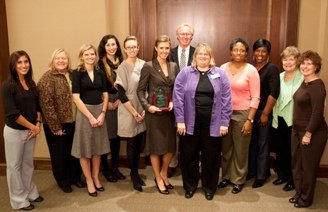
 Belmont nursing students, along with associate professor Dr. Beth Youngblood, were recently awarded the 6th Annual Project Blossom Award by the Metro Department of Health. They received the award for serving as event planners and prenatal care teachers in the Teen Conference — a program for pregnant teens in the Davidson County school system — and for their work with the Incredible Baby Shower project. The Belmont group received the award at Nursing Excellence Night on Nov. 15 following the induction on new Sigma Theta Tau members.
Project Blossom is an initiative from the Governor’s office to decrease the state’s infant mortality rate. The award is given each year to an individual or group that plays a significant role in saving babies and eliminating prenatal disparities within Nashville and the Davidson County area.
In addition to their work with the Teen Conference and the Incredible Baby Shower, Belmont nursing students have also provided teaching to patients with babies at Centennial Medical Center, Stonecrest Medical Center, and the Hope Clinic of Nashville.
Category Archives: Inman College of Health Sciences
US News recognizes best careers of 2011
Students in occupational therapy, social work, nursing and physical therapy at Belmont University’s Gordon E. Inman College of Health Sciences & Nursing can expect great job prospects during the next decade, according to the US News report on the 50 Best Careers of 2011.
For more information check out the following links:
The 50 Best Careers of 2011
Best Careers 2011: Healthcare Jobs
Best Careers 2011: Occupational Therapist
Best Careers 2011: Medical and Public Health Social Worker
Best Careers 2011: Registered Nurse
Best Careers 2011: Physical Therapist
Disaster Simulation at Belmont University
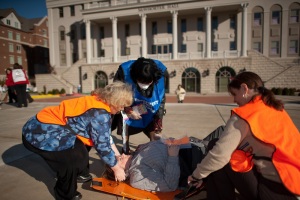 The disaster simulation drill featured as part of last month’s Tennessee Simulation Conference cosponsored by the Belmont University School of Nursing was featured recently in a Nashville Medical News article.
The article can be accessed directly at the Nashville Medical News website, but is also included below.
Collaborations and Conferences Push the Emerging Model
By: SHARON H. FITZGERALD
The scene would have been horrifying, if not for the posted signs that read “Disaster Drill in Progress.” Victims covered in faux blood were scattered on Belmont University sidewalks, stairs and lawns last month as nursing faculty from academic and hospital settings across Tennessee learned how such simulations better help their students learn.
The event was the third-annual Tennessee Simulation Conference, called “Practice, Practice, Practice! Patient Safety and Provider Performance,” held at Belmont’s College of Health Sciences & Nursing. Belmont boasts the Health Care Simulation Center, which has been recognized as a Laerdal Center of Education Excellence. That’s simulation education’s gold seal of approval. The two-day conference on Nov. 4-5 was preceded on Nov. 3 by a pre-conference at Vanderbilt University where participants new to simulation education learned the basics of setting up simulation programs at their institutions.
Just what is simulation education anyway? According to Beth Fentress Hallmark, PhD, RN, who is Belmont’s director of simulation, “A simulated clinical experience is anything that is not real. I hate to say that, but there are so many different components to it, from the actual pre-work that students have to do, to the simulation where they’re working in the lab or with a standardized patient. Because simulation is so new, we are really trying to define some of those terms.”
A “standardized patient” is an individual trained to play the role of someone who is ill or injured and that can certainly be a valuable learning tool. Yet, simulation may also be as simple as a nurse learning to administer an injection by substituting an orange for an arm. “It’s not just electronic simulators that we’re talking about,” Hallmark said, adding, “The most important portion of simulation is really the debriefing and the reflective thinking, where you sit around the table and you ‘unpack’ everything you’ve done.”
The seeds for the Tennessee Simulation Conference were sowed in 2006, when nursing education advocates across the state launched a full-fledged effort to apply for grant funding, Hallmark explained. They were successful, and the first conference at Belmont, entitled “Empowering Nurse Educators,” was held in 2008. Funding has come from a variety of sources, including the Community Foundation of Tennessee, the Tennessee Center for Nursing, Belmont, Vanderbilt and Austin Peay State University. Another financial source has been a national initiative by the Robert Wood Johnson and the Northwest Health Foundation. Called Partners Investing in Nursing’s Future, the national strategy was designed to establish a stable, adequate nursing workforce.
Today, the Tennessee Nursing Clinical Simulation Center is a website collaboration designed to help Tennessee nurse educators access the latest simulation resources. The site includes links to other websites, conferences, newsletters, presentations, journals and books, offering an in-depth look at what is practiced in the world of simulation today.
According to the website, “In today’s world of healthcare, we have learned simulation provides the learner a place safe from patient harm, helps the learner to increase confidence, and can provide the educator a means to make things happen, unlike clinical experiences. Educators are also learning that simulation education provides a format to teach teamwork.”
In fact, Hallmark’s presentation at last month’s conference focused on the importance of interdisciplinary cooperation in simulation education. “Not only is this going to be nursing, but we’re expanding this to include all disciplines. I’m working with physicians, EMTs, respiratory therapy, allied health, from the very top to the very bottom of the healthcare realm,” she said. She pointed to studies that now stress educating nurses “interprofessionally and not in those typical silos because the medical errors continue to occur.”
Still another Tennessee initiative is the new Tennessee Simulation Alliance, which held its inaugural meeting on Oct. 11 and met again in conjunction with the recent conference. Hallmark is the alliance’s program director, and she said the collaboration is multidisciplinary and involves healthcare professionals working together to ensure improved patient safety and the use of quality simulation scenarios. The alliance plans to partner with academia, industry, government and healthcare providers.
“In surgery, there’s still an increase in wrong-side surgeries or wrong-site surgeries. Isn’t that awful? We really feel like simulation is one way we can help with safety and communication and make sure that we are providing education for students before they get to the acute-care arena,” she said.
Hallmark said ongoing projects in Tennessee to further simulation include:
* Continued faculty education,
* An online “clinical placing system” database to help nursing schools find available simulation units they might use in hospitals, long-term care facilities and other institutions.
* Development of current nurses on a unit to act as clinical instructors.

PT Students volunteer again for Dierks Bentley event for Children’s Hospital
Despite heavy class loads, Belmont Physical Therapy students were still able to find time again this year to volunteer for the Dierks Bentley Miles and Music for Kids benefit concert. Bentley started the concert 5 years ago to raise money for children’s hospitals across the U.S.
This year, over 80 Belmont students volunteered in every aspect of the event, helping to make it a success according to Bentley. “I take a lot of pride in the volunteers from the School of Physical Therapy and in the fans,” he says, “because they are the ones raising the money.”
When all was said and done, the students helped to raise a total of $250,000 for Monroe Carell Jr. Children’s Hospital at Vanderbilt. A new record was also set when the annual motorcycle ride that coincided with the event saw over 1500 riders make the trip from Columbia, TN to Riverfront Park in Nashville to show support.
“Whether you have a kid or not,” Bentley continued, speaking about his own experiences with child health conditions, “when you go to a children’s hospital and you see what good they do, it moves you.”
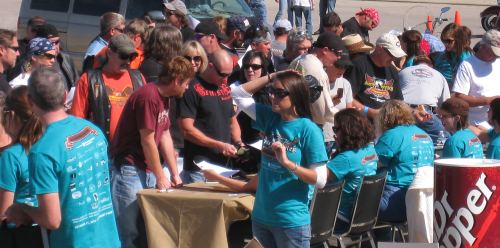
To see more photos for this event go to our Facebook page linked here.
PT’s Kevin Robinson helps Preds Star Improve His Slap Shot
Dr. Kevin Robinson from Belmont University’s School of Physical Therapy was featured this week in a story in Canada’s National Post about his work with Nashville Predators star Shea Weber to improve his slap shot. You can read the story on the National Post’s website, or see the full article below.
Sean Fitz-Gerald, National Post · Monday, Nov. 15, 2010
As a clinician and a professor of biomechanics who has worked with golfers and baseball players, Dr. Kevin Robinson was eager to apply science to a growing hockey legend. And that interest only grew after watching Shea Weber step into his first few slap shots after a recent practice.
It is a shot that ripped through an Olympic hockey net this year, leaving behind what one news agency described as “scorch marks” on the mesh. It moves with the ferocity that has reportedly broken bones in no fewer than four teammates while elevating Weber, a first-year captain of the Nashville Predators, into an object of childhood wonder.
“With that guy on skates,” Robinson said, “I was a dwarf.”
Robinson, who teaches at Belmont University in Nashville, Tenn., analyzed Weber’s shot last month with help from a digital camera and a computer program. He asked the 6-foot-4, 234-pound defenceman to take about a dozen shots in open ice, and asked the same of Predators teammates Jordin Tootoo and Cody Franson for the sake of comparison.
After taking the top of each player’s backswing as a starting point, Robinson assessed the speed with which each player met the puck. Weber and Tootoo had similar mechanics in their shots, with their sticks perpendicular and their left arms parallel to the ice at the top of the top of their swing, and each took about 0.2 seconds to get down to the puck.
The difference?
“One of them is 5-foot-8, and the other one’s 6-foot-4,” Robinson said. “One of them is swinging a bigger stick, so the angular velocity is much faster.”
Angular velocity is a measure of speed, of which Weber showed in abundance. Robinson recorded the 25-year-old with a speed of 715 degrees per second — which suggests that, if his torso was able to spin like a top, Weber could rip through two full rotations of his shot in about a second.
Tootoo was clocked in at 668 degrees per second with Franson in third, at 405.
“What that speaks to is the tremendous amount of core strength, the strength of his abdominals, the muscles that stabilize his trunk,” Robinson said. “That’s the only way you can pull that off.”
Weber, the son of a mill worker in the British Columbia interior, began to find fame with his shot during the NHL all-star weekend last year. He fired a shot that hit 103.4 mph during the skills competition, finishing second only to the Boston Bruins’ 6-foot-9 defenceman, Zdeno Chara (105.4 mph).
It was at the Winter Olympics in Vancouver where Weber’s ability began acquiring some of its mythical proportions. He sent a shot screaming in from the point in the second period of Canada’s qualification game against Germany, opening a hole in the back of the net and forcing officials to consult video review to confirm what they had missed.
Canada won in a romp, and Canadian fans found their new favourite weapon.
“I’d never seen anything like that happen on a stage like the Olympics,” Weber said with a chuckle. “It’s pretty neat to have kids come up to you when you go home and bring that up.”
It was at home, in Sicamous, B.C., where Weber first developed his shot. He always loved to shoot the puck, and spent countless summer hours hammering shots into a second-hand net off a sheet of plywood laid on the grass outside his home.
“I would wreck my sticks before anything else,” Weber said. “And Dad wasn’t too happy about that. Just try to put an extra bit of tape on it after that.”
He said he usually goes through at least one composite stick a game with the Predators, even though he estimates he really only gets an opportunity to unleash the full fury of his shot once every three or four games.
“It might come a bit in spurts,” he said. “It might go in back-to-back games, where you get an opportunity to really blast it, and then you’d go a few games where you don’t really even get a chance to shoot anything.”
Weber had never put much thought into the physics of his shot, focusing instead on the mechanics of his delivery. He used to position his hand closer to the blade when he was younger, but moved it higher as he grew older and stronger, to the point where it is now mostly muscle memory.
He takes at least 100 shots a week in practice.
“The biggest thing for me is weight transfer,” Weber said. “Obviously, it’s got to be in sequence with everything else: from the weight transfer to how you’re distributing your power from your back foot to your front foot and, obviously, leaning on your stick to get the stick to torque and whip.”
He has taken 50 shots through Nashville’s first 15 games this season, second to Atlanta’s Dustin Byfuglien (66) for most by a defenceman in the league. Weber has two goals and five assists, but struggled to regain his dominant form while defence partner Ryan Suter was sidelined for nine games with a lower body injury.
Being known for his shot can also work against Weber, when teams scheme to pin someone higher on the point when the Predators have the man advantage. That forces him off a shooting lane and into passing mode, where he has to defer to an open teammate.
And he has to be mindful of those teammates in practice, when he consciously dials down the force of his point shots, conceding he has “had some unfortunate luck over the past few years with hitting guys on our team.”
“He’s using what God gave him, his height and his strength,” Robinson said. “That’s what separates him there.”
That core strength comes from the abdominal muscles, which can be strengthened with a diet of crunches and work with a medicine ball. Muscles in the hindquarters also help to stabilize the pelvis, which — in baseball and golf, as well as in hockey — should move first in the series of movements leading up contact.
“If those are in sync,” Robinson said, “then what you have is a really efficient delivery of force.”
McWhorter Hall Wins National Award for ESa’s Design
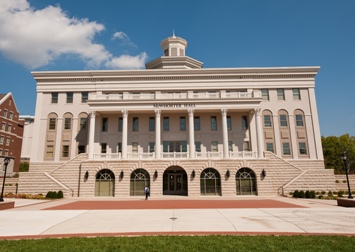 Belmont University’s McWhorter Hall—which houses the Schools of Pharmacy and Physical Therapy as well as the Department of Psychological Science—has received a Citation of Excellence Award in the national Learning By Design competition. The annual competition is sponsored by the National School Boards Association and Stratton Publishing and Marketing, Inc.
McWhorter Hall is one of 11 Citations of Excellence Award winners that were deemed the best in the nation by a recognized panel of architects and educational facility specialists. This facility and the other 10 winners will be published in the 20th Anniversary Spring 2011 edition of Learning By Design. Winners were chosen on the basis of innovative design and design excellence.
The academic building, designed by Earl Swensson Associates, Inc. (ESa), maintains the historical architectural style prevalent on the Belmont campus, while containing innovation for which the university has become known. Experiential learning spaces include a sophisticated, licensed campus pharmacy and a clinic that provide services to students, faculty and staff. Interdisciplinary simulation labs add futuristic dimensions to the programs taught within the facility.
Significant sustainable features designed into the building include a 20,000-gallon water storage tank that captures excess ground and storm water for recycling as a campus irrigation source. Surrounding the rooftop cupola are native Tennessee plants comprising the extensive green roof that reduces the urban “heat island effect,” thereby reducing heating/cooling costs. The roof continues Belmont’s efforts to be environmentally responsible. Hodgson & Douglas provided the landscape architectural design for the green roof. R.C. Mathews Contractor served as the project’s general contractor.
ESa, based in Nashville, is a 49-year-old architectural firm practicing throughout the U.S. and globally in the design areas of education, healthcare, hospitality, senior living, corporate office, and the arts & community. Other Belmont campus projects the firm has designed over the years include the recently completed Patton Hall/Bear House residence hall, Maple Hall, the Gordon E. Inman College of Health Sciences & Nursing Center, the Beaman Student Life Center/ Curb Event Center/Maddox Grand Atrium, Bill & Carole Troutt Theater, Leu Center for the Visual Arts and the Jack C. Massey Business Center.
McWhorter Hall Dedicated
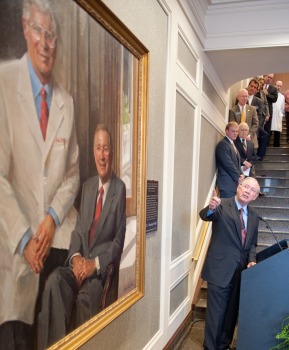 Governor Bredesen, others participate in ceremony honoring healthcare leader Clayton McWhorter and the late Fred McWhorter
Belmont University honored Clayton and Fred McWhorter Friday morning during the official dedication ceremony for the newly opened McWhorter Hall. The 90,000 square foot, state-of-the-art academic building houses the University’s Schools of Pharmacy and Physical Therapy, as well as the Department of Psychological Science. McWhorter Hall was named in honor of Belmont Trustee Emeritus and Chairman of Clayton Associates, Clayton McWhorter, and his brother, the late pharmacist Fred McWhorter. Both men dedicated their careers to the healthcare field, making a difference in the lives of countless individuals and championing healthcare reform.
In addition to Belmont President Dr. Bob Fisher and Board of Trustees Chairman Marty Dickens, others offering remarks included Tennessee Governor and longtime McWhorter family friend Phil Bredesen, SHOUTAmerica Executive Director Landon Gibbs and Clayton Associates President Stuart McWhorter, Clayton’s son.
While all the speakers remarked on Clayton McWhorter’s countless contributions to healthcare and the education of future generations, the event centered around Clayton’s brother Fred, who was a practicing pharmacist for more than 50 years. Clayton McWhorter said, “My brother Fred practiced pharmacy like it should be practiced and stayed true to his profession, loving every minute of it. I believe he would be honored to have this building bear the McWhorter name, but I’m even more hopeful that the student pharmacists and other health care specialists learning within these walls will look to my brother as a premier model of their profession.”
A portrait of the brothers, painted by noted artist Shane Neal, was unveiled at the ceremony along with a plaque of dedication: “I will consider the welfare of humanity and relief of suffering my primary concerns (Oath of a Pharmacist). This building is dedicated in honor of beloved healthcare leader Clayton McWhorter and his brother, longtime practicing pharmacist Fred McWhorter. May their example of professional knowledge, personal integrity, innovative leadership and tireless giving to their community and their patients inspire the many students who will walk these halls.”
College of Health Sciences to Host Two Major Healthcare Events This Week
The Gordon E. Inman College of Health Sciences & Nursing at Belmont University will host two major statewide healthcare events this week.
On Thursday, November 4, 2010, invited nurse leaders and other healthcare professionals from across the state will meet in the Curb Events Center at Belmont for the Tennessee Primary Care Nursing Summit. The Summit will examine how to maximize the contributions of nurses and develop recommendations to meet the challenges and opportunities of healthcare reform in the delivery of primary care services to improve the health of Tennesseans.
The event is scheduled in coordination with the release of the Institute of Medicine’s report, The Future of Nursing: Leading Change, Advancing Health. Dr. Susan Hassmiller from the Robert Wood Johnson Foundation is spearheading efforts for this initiative and will deliver a keynote address at the Summit. Other speakers include Dr. Paul Erwin from the University of Tennessee Center for Public Health and Policy, who will outline Tennessee challenges, and Dr. Peter Buerhaus from Vanderbilt University, who will look at cost and utilization data related to advanced practice nurses.
The Summit is sponsored by the Howard H. Baker Jr. Center for Public Policy, in conjunction with the University of Tennessee College of Nursing at Knoxville and the Health Sciences Center, the College of Medicine at the UT Health Sciences Center, and the Gordon E. Inman College of Health Sciences & Nursing at Belmont University. The Baker Center is a nonpartisan institute at the University of Tennessee in Knoxville devoted to education and scholarship concerning public policy and civic engagement.
Nurses across the state will have opportunity to watch a live or archived webcast of the Summit’s keynote addresses and can post comments on a blog hosted by the Baker Center. Input from participants at the summit and on the blog will be used by Baker Center Fellows to develop final summit recommendations and strategies. Once the Baker Center report is released, nurses can use the report to advocate for recommended changes with state policymakers and other stakeholders. Copies of the report will be available on the Baker Center website after the first of the year.
In addition to the Nursing Summit, Belmont will also host the third annual Tennessee Nursing Simulation Conference beginning on Thursday, November 4, 2010. Last year, nearly 150 educators and hospital administrators from Tennessee and various other states attended the conference, which is presented by Belmont’s School of Nursing and The Community Foundation of Middle Tennessee through a grant from the Partners Investing in Nursing’s Future – a collaborative initiative of the Robert Wood Johnson Foundation and the Northwest Health Foundation.
The conference is designed to provide a comprehensive overview of simulation technology and resources and to build communication networks for educators in Tennessee. Conference faculty include nationally renowned experts on simulation technology in healthcare education and training.
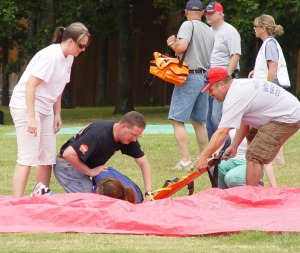 This year’s conference will feature a mass casualty disaster simulation presented by the Arkansas State University Regional Training Center for Disaster Preparedness Education. The Center is part of the University’s College of Nursing and Health Professions and offers certification courses in basic and advanced disaster life support. These courses provide training in areas such as detecting disasters, incident command, securing the scene and making it safe for responders to go in, assessing additional hazards, establishing triage and treatment, taking on and off hazardous materials suits, assessing and treating persons injured in disaster, and administering medications stored in the strategic national stockpile.
Occupational Therapy Alumni and Life Care Donate Textbooks to Current Students
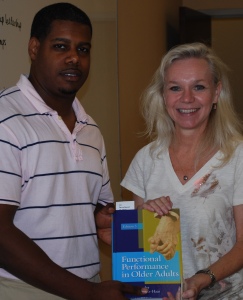 Two alumni of Belmont’s Master of Science program in Occupational Therapy (MSOT) recently presented current students in the program with textbooks to be used in the coming semester. Tim Sullivan and Angie Salvucci made the donation on behalf of Life Care.
Life Care, which serves Nashville’s elderly population, has also donated textbooks to the Occupational Therapy Doctorate program for the past three years. Sullivan and Salvucci were adjunct instructors for the MSOT program over the summer.
Robinson Helps Bring Physical Therapy Services to New Nashville Location
 Thanks to a new partnership between Gordon Jewish Community Center and Baptist Sports Medicine—one that Belmont’s own Dr. Kevin Robinson from the School of Physical Therapy was a part of—residents of Bell Meade and Bellevue can now receive medical attention much closer to home.
The recent venture made it possible for those seeking medical attention to visit a Baptist therapist at the Community Center for services including orthopedic physical therapy, aquatic therapy, sports medicine and back, neck and spine pain therapy. Bubba McIntosh, interim executive director for Baptist Sports Medicine, said he hopes the program will grow to include more services and expanded hours.
And grow, it has. McIntosh explained that even before the program’s official grand opening, patients began scheduling appointments. Since then, the clinic has begun to see anywhere from six to twelve patients per day, and that number only seems to be growing. The partnership will no doubt serve as a great convenience to the people of Nashville.
Miss Tennessee Teen All-American aims to study nursing at Belmont
From the Paris Post-Intellegencer. . . .
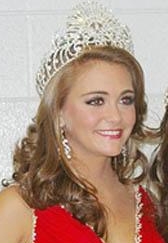 Henry County High School senior Hannah Robison is the new Miss Tennessee Teen All-American. She won the title Oct. 10 in Lebanon.
Hannah participated in evening gown, interview and swimwear before she was selected the state winner. She now advances to the national Miss Teen All-American Pageant in Philadelphia in 2011. The national title was won in the past by actress Halle Berry, spokesmodel Debbie James and former Miss USA Lynette Cole of Tennessee.
Hannah is a 2010 Girls’ State representative and is her senior class secretary. She hopes to study nursing at Belmont University beginning in the fall of 2011. She was also a 2010 participant in the National Youth Leadership Forum on Medicine at Harvard University.
Hannah pulled off a rare double earlier this year. She was the Hostess Princess for the World’s Biggest Fish Fry and also was named queen during the Fairest of the Fair pageant at the Henry County Fair, thus winning the top two beauty pageant titles in the county during the same year.
Hannah is the daughter of Pam and Rusty Robison.
Nursing students help serve the community
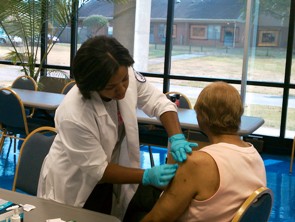 Recently, nursing student Ashley Scoby administered flu shots to Edgehill residents in the I.W. Gernert Homes along with School of Nursing faculty Dr. Anita Chesney and Dr. Ruby Dunlap. The shots were donated by Student Health Services.
“The three of us really enjoyed interacting with the residents of the IWG high rise,” Dunlap said. “This is the kind of nursing I enjoy most— offering health services right where people live.”
In addition to the flu clinic, 87 nursing students have made home visits to refugee family clients of Catholic Charities and World Relief Refugee Resettlement. The students provided health assessments, nutrition and medication instruction and instruction on the U.S. healthcare system. The families hailed from various countries, including Nepal, Burma, Iraq and Ethiopia.
School of Nursing Adds 4 New Faculty Members
The Gordon E. Inman College of Health Sciences & Nursing welcomed four new full-time faculty members into the School of Nursing this fall. These new members include the following individuals:
Jamie Adam comes to us from College of the Ozarks in Missouri as a full time faculty member in adult health and will be joining us in August. She has a wide range of teaching experience including 2 years at MTSU. She has an MSN from MTSU as a family nurse practitioner and a DNP in Educational Leadership from Case Western Reserve University. Jamie has experience with high-fidelity simulation and has an interest in transcultural nursing. She is also fluent in Spanish.
Loretta Bond is joining us on a full time basis beginning in August to work in adult health areas. Loretta comes to us with many years of teaching experience, most recently at Marquette University and Western Kentucky University. She has been teaching in our Adult Health I labs for the past two semesters. Loretta has an MSN form Marquette University with a support area of curriculum and instruction. She is near the completion of her doctoral work at RUSH University with a research area in health disparities-cultural mistrust.
Sandy Rosedale is inaugurating a new role at Belmont as clinical placement coordinator. She will begin in July and will be on a 12-month contract going forward. Her role will include being our primary contact to all our clinical agencies. Sandy has an MSN from University of California, San Francisco as a Geriatric Clinical Nurse Specialist. We have known Sandy well over this past academic year as she has served in a full time adjunct faculty role teaching in community health and leadership and management. She will continue to teach approximately 6 hours per semester.
Erica Sevier is a new full time faculty member with primary responsibility in women’s health. She will be teaching primarily in NUR 4210 but will continue to help with some adult health clinical from time to time. Erica has an MSN from Vanderbilt University in Women’s Health. Of course we already know Erica from her full time adjunct role with us over the past year. Erica is teaching in the OB course this summer and will begin her full time responsibilities in August while continuing her doctoral work at Trevecca.
Health Science Faculty News
Here is what some of the College of Health Science professors have been up to recently:
 Dr. Michael Voight, a professor of Physical Therapy, was appointed to the State Board of Physical Therapy by Governor Phil Bredesen. Dr. Voight was one of 135 men and women chosen throughout the state of Tennessee to represent their respective areas of expertise. In regards to the appointments, Governor Bredesen commended “all those appointed for their willingness to serve the state through its boards and commissions. Tennesseans have always been recognized for dedicating their time and talents to serve their fellow citizens, and I appreciate these men and women for upholding this tradition.”
Dr. Voight also spoke at the National Athletic Training Association annual meeting in Philadelphia, at the American Orthopedic Society for Sports Medicine Annual Meeting held in Providence Rhode Island, and taught a group of 50 European physiotherapists the Netherlands about physical assessment of golfers and the implications for exercise in the management and prevention of golf related injuries.
 Dr. Teresa Plummer presented at the Rehabilitation Engineering and Assistive Technology of North America (RESNA) annual conference in Las Vegas, NV.
Using findings from her dissertation research concerning the current state of wheelchair assessment and procurement process, she presented and also taught a half-day instructional course on the “relationship between vision, posture and mobility.”
Dr. Penny Prowers organized a team of students that presented at the RESNA conference. A write-up of their experience at the conference can be found here.
 Dr. Ruby Dunlap participated in the 2010 State Health Plan Regional Workshop. These workshops are conducted by the Tennessee Division of Health Planning to get feedback from citizens on Tennessee’s proposed health goals and strategies for the state.
Dr. Dunlap advocated for strategies designed for health promotion, disease and injury prevention, and the optimizing of the roles of non-physician clinicians such as nurse practitioners to increase access to health care and decrease health disparities.
 Dr. Salvatore Giorgianni was appointed to the Statewide Advisory Board to the Governor’s Office on the Men’s Health Report Card.
Schools of OT and PT to host Amtryke Road Show
The School of Occupational Therapy and the School of Physical Therapy will jointly be hosting a workshop in early October focusing on the benefits of the Amtryke Therapeutic Tricycle Program—a unique mobility service that uses custom-built tricycles to assist people with disabilities.
The event, scheduled for the 6th, will be held in the McWhorter Building room 205 from 5-6 pm, as an encouragement for local therapists to bring the benefits of Amtryke to children with disabilities. Sue Haywood, a physical therapist from National AMBUCS—the non-profit service that owns and operates Amtryke—will be present to conduct in-service training sessions for therapists.
Over 15,300 AmTryke vehicles have been distributed around the world to date. The majority of these “trykes” are purchased by volunteers and donated free of charge to financially-needy children. The trykes themselves can be operated using hands and/or feet, and are designed to accommodate riders of all ages, sizes, and varying degrees of physical limitations. Both physical and occupational therapists acknowledge the many therapeutic benefits of the AmTryke program, mentioning improved motor skills, strength, and self-esteem as just a few.
Students are invited to attend this event. Click here for more information.
PT Health Fair: A Great Opportunity for Students amd Community
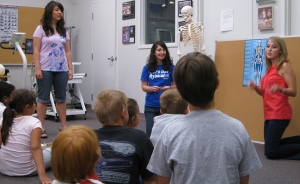 Many opportunities exist at Belmont for physical therapy students to get involved on the health front, both on and off campus. One of these opportunities—arguably among the most exciting according to past participants—is a series of annual health fairs held for fourth grade students each year. The event has become an annual occurrence in Dr. Pat Sells’ Health and Wellness course for second-year physical therapy students.
The most recent fair benefited over 200 local fourth grade students from both Carter Lawrence Elementary in the Edgehill community and East Cheatham Elementary. Participating students got the opportunity to teach a series of health and wellness topics, and to conduct fun activities with the children. Topics included safety, heart health, physical activity, dental health, nutrition, healthy bones, and smoking.
College of Health Sciences to host Mobile Healthcare Technology Summit
A panel of healthcare experts is poised to come together on Belmont’s campus on September 30 for the Mobile Healthcare Technology Summit. Industry leaders in attendance plan to explore how mobile healthcare technology impacts healthcare design, clinical practice and the overall future of healthcare.
“Hosting this panel at Belmont is an honor,” says Dr. Beth Hallmark, Director of Simulation for the Gordon E. Inman College of Health Science & Nursing. “We want to be seen as leaders in healthcare education; this simply reinforces our already prominent place in the community.”
Members of the panel include Joyce Sensmeier, vice president of healthcare information and management systems society at HIMSS—the largest U.S. not-for-profit healthcare association focused on providing global leadership for the optimal use of information technology—and Scott Cebula, former CIO for Huntington Memorial Hospital in Pasadena, Calif., president of Cebula IT Consulting, among many others. Panelists plan to examine the issues and opportunities that exist in establishing best practices, addressing legal implications and maximizing impact on patient safety and staff efficiencies.
Physical Therapy Students Present at Annual RESNA Conference
Four Belmont physical therapy students recently got the chance to present at the annual Rehabilitation Engineering and Assistive Technology Society of North America (RESNA) conference in Las Vegas, Nevada. Their research project entitled, “Functional Outcomes and Patient Satisfaction of Client in the Seating and Mobility Clinic,” examined the overall satisfaction of wheelchair users with their product, as well as the patients’ care while in the Vanderbilt Seating and Mobility Clinic.
Betsy Codington, one of the students involved in the project, hopes that the their research would be used by Vanderbilt to “better inform and equip the clinic in serving their clients.” Other students involved included Sarah Jo Lyons, Larry Pemberton and Daniel Rogers. All studies were conducted under the students’ research mentor, Dr. Renee Brown from the Belmont School of Physical Therapy, who also accompanied the students on their trip to the RESNA conference.
RESNA exists as an effort to improve the lives of people with disabilities through the use of different technologies. The foundation’s yearly conference brings together a diverse group of therapists, seating specialists, engineers and end users for this central cause.
Hallmark Named Belmont Ambassador for National League for Nursing
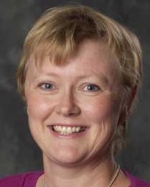 Dr. Beth F. Hallmark, Director of the College of Health Sciences Simulation Center, was recently selected to be Belmont’s representative for the National League for Nursing. The NLN Ambassador Program was established in the fall of 2006 with an initial cadre of 126 members who teach in all types of nursing programs – practical nurse, associate degree, diploma, baccalaureate, master’s and doctoral. Today there are over 700 ambassadors representing schools of nursing in 50 states and 5 countries.
As NLN Ambassador, it will be Dr. Hallmark’s responsibility to keep Belmont’s nursing program informed about the NLN’s programs, grant opportunities, and member involvement initiatives.
Dr. Hallmark recently completed her PhD in Educational Leadership with a concentration in E-Learning at Touro University International. She also holds an MSN from Vanderbilt University in Child and Family Nursing. She has been at Belmont University since 1997 and was appointed as Director of Simulation for the Gordon E. Inman College of Health Sciences & Nursing in 2009.
Belmont Celebrates Opening of New Health Sciences Building – McWhorter Hall
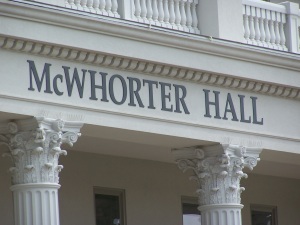 Belmont University celebrated the grand opening of the new 90,000 square foot McWhorter Hall at a ribbon cutting event held on campus Saturday. The state-of-the-art academic building houses the Schools of Pharmacy and Physical Therapy, as well as the Department of Psychological Science. McWhorter Hall is being named in honor of Belmont Trustee Emeritus and Chairman of Clayton Associates, Clayton McWhorter, and his brother, the late pharmacist Fred McWhorter. Both men dedicated their careers to the healthcare field, making a difference in the lives of countless individuals and championing healthcare reform. In addition to his longtime relationship with the University and his work on the School of Pharmacy’s initial Study Team and External Advisory Committee, Clayton is also providing a major leadership gift in support of Belmont’s new academic building.
Belmont President Dr. Bob Fisher said, “This building is a model, 21st century academic facility that will provide the perfect space and environment where our students and faculty can intersect in service to help meet the medical needs of our community and our world. We are honored to have the McWhorter name on the building, knowing that it will endow this space with a legacy of compassionate, professional care for others that our students will be equipped to emulate.”
‘New Careers in Nursing’ Scholarship Program Continues
The School of Nursing has announced that for the second year in a row, it has received funding to award scholarships from the Robert Wood Johnson Foundation (RWJF) and the American Association of Colleges of Nursing (AACN) through the RWJF New Careers in Nursing Scholarship Program (NCIN). Grants provided through this competitive program will be given to students traditionally underrepresented in the field of nursing and strives to prepare culturally competent leaders in Belmont’s accelerated Bachelor’s of Science in Nursing program.
NCIN was launched in 2008 to address the national nursing shortage and fuel the pipeline of diverse nurse faculty. “Through the NCIN program, we are challenging the nation’s nursing schools to be innovative and resourceful in how they grow their nursing programs, diversify student populations and contribute to the nursing leadership of tomorrow, said Denise A. Davis, Dr. P.H, RWJF program officer for NCIN. “We are very pleased to support this unique approach, particularly at a time when growing numbers of Americans are gaining insurance and entering our health care system.”
Dr. Chris Algren, Belmont’s associate dean of nursing, said, “We are so pleased that we have once again received funding for the New Career in Nursing scholarships. This program has increased enrollment in the accelerated program for second degree students who are underrepresented in nursing. Since little funding is usually available for second degree students, we are very appreciative to the Robert Wood Johnson Foundation for assisting us to meet the needs of these highly motivated students.”
Belmont Races Into Top 5 in U.S. News Rankings of America’s Best Colleges
University hits highest ranking ever; honored for teaching, innovation
At the release of last year’s U.S. News & World Report rankings of America’s Best Colleges, Belmont University President Dr. Bob Fisher said, “Seven is the perfect number—until we reach six!” Today Belmont leapt right over position No. 6 to land at No. 5 in the Best Regional Universities—South category, the University’s highest placement in its history. Since 2003, Belmont has risen 16 spots on the nation’s prestigious rankings chart, from 21st to 5th.
Fisher said, “There are times when even I am speechless. Rising to the Top 5 in U.S. News represents a key element of Belmont’s Vision 2015 plan. To reach this level of prominence already demonstrates the immense dedication and talents of Belmont’s faculty, staff and students in accomplishing what has clearly been an ambitious University goal. One thing’s certain: complacency is not an option. We will continue our efforts to seek positive change and growth at every opportunity.”
Belmont was also honored for the third year in a row by fellow college administrators as a top “Up-and-Comer” for making “the most promising and innovating changes in the areas of academics, faculty, student life, campus or facilities.” Recognizing Belmont’s vision to be a “leader among teaching universities,” Belmont was ranked second in the South category for strong commitment to undergraduate teaching and for learning communities.
School of Pharmacy Selected to Join Study with Vanderbilt for Interprofessional Medical Training
The School of Pharmacy at Belmont University has been invited to join Vanderbilt University School of Medicine in a three-year study to bring students in different disciplines together to learn to serve patients as a team.
The study is being funded by a $600,000 grant from The Josiah Macy Jr. Foundation, who for nearly 50 years has focused resources on improving the education of health professionals.
Through this grant, first-year medical students and first-year advanced nurse practitioner students from Vanderbilt will join with first-year doctoral-level pharmacy students from Belmont University and Lipscomb University and first-year master’s-level social work students from Tennessee State University to learn how to work together more efficiently and effectively.
‘Green Roof’ Completed on New Health Sciences Building
 With the official opening of the new health science building next week, the installation of a green roof on 90,000-square-foot facility has recently been completed. The only large extensive green roof on an educational facility in Nashville, the green roof serves several purposes including a reduction in the “heat island effect,” which refers to the trend of generally higher temperatures in urban areas as opposed to more suburban areas. The green roof lowers air temperatures which helps reduce that effect. Green roofs also provide natural habitats for wildlife (birds, insects, etc.) and reduce pollution by holding pollutants rather than washing into groundwater, sewer or drainage systems. In addition, the green roof can retain some rainwater for irrigation and can reduce the heating/cooling costs by providing lower temperatures around air intake systems.
Pharmacy Care Center and Health Services Open Today in New Facility
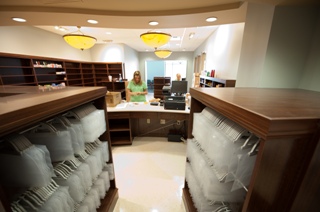 Starting today, the new Belmont University Health Services and Pharmacy Care Center open their doors in the nearly-completed health sciences building, adjacent to the Inman Center. The collaborative initiative between Belmont’s expanded Health Services Center and the new Pharmacy Care Center will create a unique interdisciplinary approach to servicing the needs of Belmont University while also providing a working classroom for Belmont’s student pharmacists.
In addition to traditional prescription filling and or compounding services, the pharmacy will offer many healthcare items found in retail pharmacies (over-the-counter products, vitamins, first-aid items, etc.). The Pharmacy Care Center will also provide various pharmacist consultation, education and wellness programs such as smoking cessation, diabetic counseling and Medication Therapy Management (MTM).