
Dr. Ruby Dunlap’s Uganda Fulbright Blog
 “Does the U.S. have a big problem with culture?” asked Eva, her small face full of concern. We had just finished reading and discussing Wellman’s chapter on “The Diverse Learning Needs of Students” in the 2009 Billings’ textbook on Teaching in Nursing. The “problem” in this chapter (pp. 21-22) is expressed partly as a catalogue of failures, failure to recruit sufficient minority nursing students and nursing faculty, failure to adequately support the minority student, etc. “Well, children in the U.S. go to similar schools,” I said, “and almost all of us speak the same language. We do have some cultural issues but I don’t think we have a ‘big problem’ with culture. What about Uganda?”
“Oh, all children in Uganda learn English from the beginning,” she said, taking her cue from me. “We don’t have a big problem with culture in Uganda.” (See photo of Eva, the young woman wearing the black sweater. Christine is busy at the computer in front of Eva who is speaking with Keren.)
 Members who could from UCU’s health sciences department spent the weekend in a retreat at Sipi Falls near the Kenya border. That I survived this experience is testament to a God in heaven. It all began innocently enough with Faith, one of those splendidly capable young women such as Belmont’s school of nursing has in Karen and Heather, telling me “we would do a little walking.” Faith had organized the whole thing, all the meals and the stay at the Crow’s Nest at Sipi Falls. Why that name didn’t make me suspicious I’ll never know.
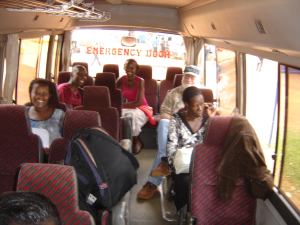 Edward, a physician, who is the administrator of a MBA in healthcare. Francis, one of the instructors for their BS in community health, an important non-nursing health profession in developing countries. Clarissa and Selah (pronounced Sell-ah) from the MPH in maternal-infant health. Mike told me it’s actually an MPHL (MPHLeader) degree, open to anyone with a previous bachelor’s degree and very popular; it has UCU’s largest enrollment for a health profession. Tom was our driver. And finally, Grace and the other Faith, two of my MNS students and also faculty for the RN-BNS program. Here’s a photo of our first meal stop, lunch on Friday. I had beans and rice with greens, all delicious.
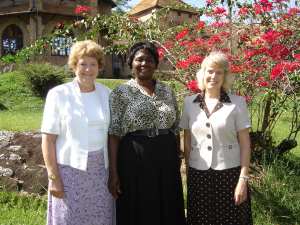 Karen Drake is a tall, strong woman whose primary home is now Minneapolis but who has spent most of her life on foreign missions of one kind or another. She lived with her parents in Japan until she was 17 years old, becoming fluent in all things Japanese.
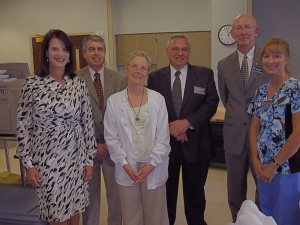 Lisa Quigley, Chief of Staff for Congressman Jim Cooper, recently visited the College. Pictured here from left to right are Ms. Quigley; Christopher Coates, President & CEO of American Seniors Foundation; Beth Williams, Simulation Assistant; Jack Williams, Dean of the College; Phil Johnston, Dean of the School of Pharmacy; and Joy Cook, Adjunct Professor of Nursing.
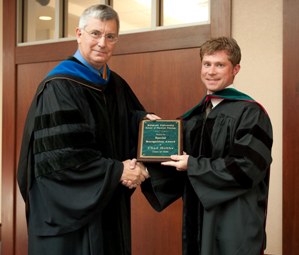 Dr. Chad Hobbs, an August 2009 Physical Therapy graduate, received a Special Recognition award last week for his work in developing equipment innovations for amputees. As part of his clinical education experience, Hobbs worked at the Walter Reed Army Medical Center Amputee Center in Washington, D.C., where he created a glove for an amputee who had lost a portion of his hand and elliptical foot plates for lower extremity amputees.
 The hour of reckoning, the day of doom, must elicit a look on the human face which is among those things transcending place or time. We arrived at Uganda Christian University at the end of the first week of final exams and just before the beginning of the second week when pen to paper or mouse to screen stand in as prototypes for that Apocalyptic opening of books.
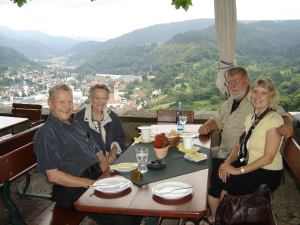 That Ireland has no snakes is hardly more remarkable than that Germany has few enough flies and mosquitoes to make the leaving open of windows and doors during pleasant weather a practical option. The meeting of wind with curtain, the outdoor garden with indoor polished wood unimpeded by inelegant mesh screens, is one of the pleasures of being in Germany, ranking behind German bread but, for me anyhow, considerably before the autobahn.
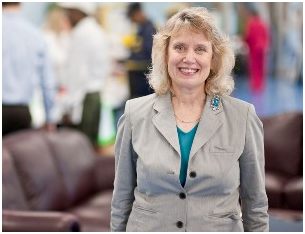 Dr. Ruby Dunlap, associate professor in the School of Nursing, was recently selected as a 2009-10 U.S. Fulbright Scholar for Sub-Saharan Africa, specifically Uganda. Dunlap will be a guest lecturer in nursing at Uganda Christian University which is located 23 kilometers outside of Kampala, Uganda. She will also be conducting research on how standards of nursing are adapted to austere conditions.
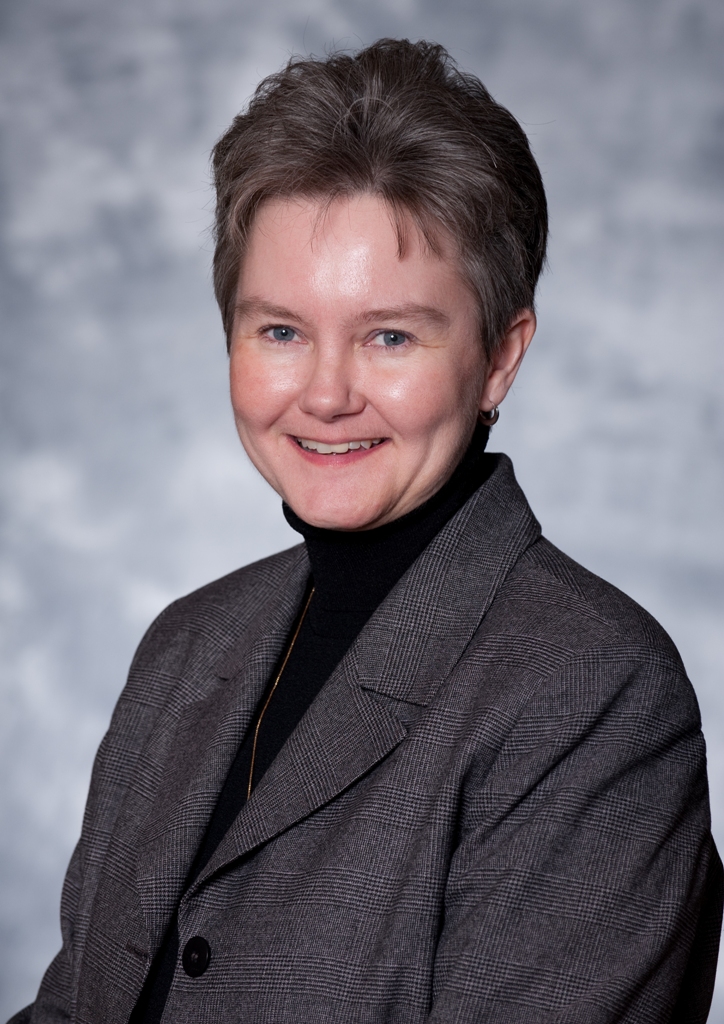 Dr. Kelley Kiningham, associate professor in the School of Pharmacy, was recently informed that an article she co-authored titled “Progestin Stimulation of Manganese Superoxide Dismutase and Invasive Properties in T47D Human Breast Cancer Cells” has been accepted for publication in the Journal of Steroid Biochemistry and Molecular Biology.
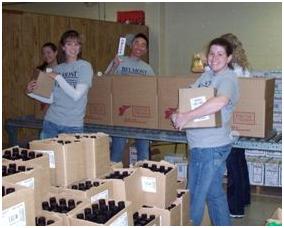 Fourteen members of the American Pharmacy Association student chapter, led by Associate Professor of Pharmaceutical Sciences Dr. Kinsley Kiningham, recently spent a Saturday in service at Feed the Children in Nashville. They packed nearly 500 boxes (approximately 12 pallets) of hygiene products for distribution to persons in need, locally and beyond. Student participants included Laura Hays, Bounchanh Souriyavong, Courtney Sowels, Cassidy Domagalla, Jackie Deal, Donny Mai, Benson Chiong, Lee Rembert, Zac Renfro, Catherine Williams, Lindsey Archer, Lindsay Locke, Chris McKnight and Ali Foster.
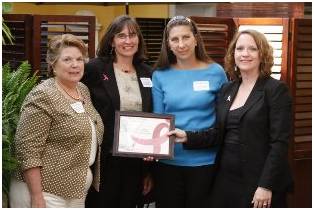 Belmont Physical Therapy faculty Renee Brown, PT, PhD, worked with two Vanderbilt faculty members on a project which was awarded $75,000 from the Susan G Komen Foundation, Greater Nashville. The project is titled “Transitioning from cancer patient to survivor: physical and functional considerations after breast cancer for primary care providers and survivors.” This project will focus on educating primary care providers about long term physical and functional problems after breast cancer as well as providing them with education materials to provide their patients.
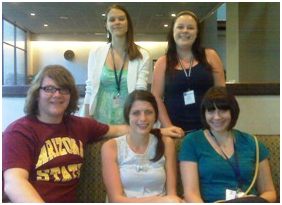 Social work majors Michelle Barnett, Elizabeth Brown, Claire Godwin, Whitney Harold and Jimmy Smith joined their professors to attend the Association of Baccalaureate Program Directors annual meeting in Phoenix, Arizona. The conference theme was “The Future is Now,” which showcased the infusion of innovation and technology in social work practice. In addition to serving as conference volunteers, students attended a variety of workshops and met with dozens of graduate program representatives.
 Former Senate Majority Leader Bill Frist, M.D., made a special appearance on campus recently to speak on “Hope Through Healing Hands,” his global health initiative that strives to change the world through raising awareness and taking action against global disease, extreme poverty and other health-related issues.
 Cambodia meant many things; a new land, a new culture, and a new people. The part I will miss most deeply is the relationships formed with the many people with whom we had the chance to become acquainted and even build meaningful friendships. Sunday was our last real chance to say goodbye to those who helped make the trip a memorable one. At church on Sunday morning the congregation honoured the Belmont group by presenting us with beautiful Cambodian silk scarves not only to commemorate our time in Cambodia but also to commend the work we’d performed. The irony of the situation was that the exchange occurred inversely; those truly deserved of commendation were the ones who accepted us into their lives whole heartedly and showed us an unforgettable time.
 Waking up early to exercise in Cambodia has become one of the most enjoyable parts of the trip. People are able to participate in the morning routine of running, walking, dancing to music, or any other type of exercise. Furthermore, it helps everyone to get ready for the day. This morning I had the opportunity to see monkeys as they ran around looking for food.