 Live for today. Savor life. Since her diagnosis of stage 4 colon cancer at the age of 33, that is Sara Walker’s motto. It is the message she has been bringing to others. It is how she is living her life. You can follow her journey at caringbridge.org/visit/sarawalker.
“The Walker Run, Live for Today” is a fun run/walk produced by Belmont Physical Therapy Class of 2003 that is designed to help support Sara and her family as they walk this road and continue savoring life. Sara (Pigg) Walker attended Lipscomb University for undergraduate studies and graduated from Belmont University’s Physical Therapy program. Sara is married to Brian Walker and is the mother of two boys (ages five and three).
Health Science Students, Faculty and Alums Head to Guatemala for Mission Trip
2011 Mission Trip to Guatemala
For the fifth consecutive year, Belmont University’s Gordon E. Inman College of Health Sciences & Nursing will be sending a team of health professionals and students to Guatemala for a Christian service project. This year’s trip will occur during the university’s spring break, March 6 – 12.
The mission trip was originated in 2007 by students in the School of Physical Therapy. Since then, students and staff from the other allied health disciplines in the College have joined the annual effort. Last year, a multidisciplinary medical team of 36 travelled to Guatemala City, where they taught at a Christian high school serving one of the city’s poorest neighborhoods and at a local university, served over 400 individuals at a soup kitchen each evening, and helped treat and immunize patients at several area clinics.
Belmont Adds Chapter of Delta Chi Professional Pharmacy Fraternity
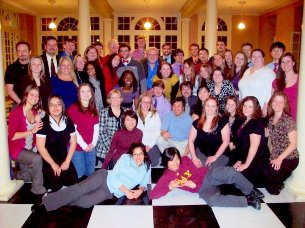 The Gamma Xi Chapter at Belmont University was recently inducted into Phi Delta Chi Professional Pharmacy Fraternity. Gamma Xi is the 86th Chapter chartered since the founding of the Fraternity on November 2, 1883. The Phi Delta Chi Fraternity develops leaders to advance the profession of pharmacy and its allied interests. It is a lifelong experience, promoting scholastic, professional and social growth in its Brothers. Over 25 Brothers from 13 different chapters across the United States were present to initiate 23 founding Brothers from Belmont University School of Pharmacy. The Gamma Xi Chapter of Phi Delta Chi looks forward to working with the other fraternities and organizations on campus to help develop a healthy culture for students, faculty, administration and community residents.
Social Work accreditation affirmed at Belmont University for eight more years
The Council on Social Work Education (CSWE) has reaffirmed Belmont University’s social work program accreditation for the next eight years. The action came at the February meeting of the Council’s Commission on Accreditation, and recognizes the university’s social work department with its highest endorsement. “This is great news for our students,” said Dr. Lorraina Scholten, Chair of Belmont’s Social Work Department, “not only to know that their education meets the highest standards of our profession, but also to benefit from the advanced standing they will enjoy in graduate programs around the country.”
Belmont University offers a Bachelor of Social Work (BSW) degree and the program has been accredited since 1999. The Council on Social Work Education represents more than 3,000 individual members, as well as graduate and undergraduate programs of professional social work education. Founded in 1952, this partnership of educational and professional institutions, social welfare agencies, and private citizens is recognized by the Council for Higher Education Accreditation as the sole accrediting agency for social work education in this country. CSWE administers a multi-step accreditation process that involves program self-studies, site visits, and commission reviews. There are currently 471 fully-accredited baccalaureate social work programs in the United States.
The Social Work Department is part of the Gordon E. Inman College of Health Sciences & Nursing at Belmont University. This alignment affords social work majors the opportunity to interface with allied health pre-professionals in nursing, occupational and physical therapy, and pharmacy, enhancing their preparation for a wide array of career options. Social work students at Belmont also benefit from individual attention from faculty members who are experienced practitioners, excellent field placement options, and unique course offerings. The Social Work Department is housed in the Gordon E. Inman Center on the campus’ northeast corner.
Belmont University School of Physical Therapy helps the Nashville Predators improve their shot
Belmont University’s School of Physical Therapy has been consulting with the Nashville Predators hockey team this season to help players perfect their slap shots. The work of PT faculty members Dr. Kevin Robinson and Dr. Pat Sells, using the school’s Motion Analysis Lab, was featured during an in-game report on Fox Sports South when the Preds hosted the Detroit Red Wings on February 5. The video can be viewed below.
Belmont’s consultation with the Predators is ongoing and will continue with additional research later this year in the Motion Analysis Lab. In November, Dr. Robinson’s work with the Predators Shea Weber was featured in a story in Canada’s National Post. The story is available online at National Post’s website, and is reprinted below.
College of Health Sciences selected for Health Information Technology Scholars Program
The Gordon E. Inman College of Health Sciences & Nursing at Belmont University has been selected to be part of the 2011 Health Information Technology Scholars Program (HITS), which is supported by a five-year $1.5 million grant provided by The Health Resources and Services Administration’s (HRSA’s) Bureau of Health Professions (BHPr) in partnership with the Office of Health Information Technology (OHIT). This is the fourth year of the grant and Belmont is one of 29 universities to join the program in 2011.

 Dr. Beth Hallmark from the School of Nursing and Dr. Kelley Kiningham from the School of Pharmacy submitted the project proposal to integrate electronic health records in medical simulation via inter-professional collaboration. Both will attend a planning conference in March and complete the project during the next year.
The HITS program is designed to merge informatics, tele-health, simulation and e-learning to create powerful learning environments, to integrate IT in curricula to educate future practitioners, to expand infrastructure for clinical learning processes, and to optimize patient safety and drive improvements in healthcare quality.
Hachtel Selected for AOTF/Patterson Foundation Award
 Dr Yvette Hachtel, professor of occupational therapy, has been selected as a recipient of an AOTF/Patterson Foundation award for Community Volunteerism. This award, a joint project of the American Occupational Therapy Foundation and the Patterson Foundation of St. Paul, Minnesota, is being given for the first time this year and recognizes outstanding community volunteerism that meets the needs of disadvantaged individuals who would otherwise not be able to benefit from occupational therapy services. This award was given for the work on the Odyssey program of the Campus for Human Development in Nashville and was viewed by the selection committee as one of the applications best reflecting the overall purpose of the award. Her accomplishment will be recognized during the Award Ceremony at the Annual AOTA Conference and Exposition to be held in Philadelphia, Pennsylvania on April 16, 2011. In addition to this award, Dr Hachtel will receive a check for $1,000.
Graduate nursing class submits manuscript for publication
The Graduate Nursing Research Applications class from Fall, 2010 semester has submitted a manuscript to the Journal of Pediatric Nursing entitled Empower U: Effectiveness of an Adolescent Outreach and Prevention Program with Sixth Grade Boys and Girls: A Pilot Study. This group is led by Dr. Sharon Dowdy.
Health Sciences faculty receive promotions
Congratulations to faculty members in the Gordon E. Inman College of Health Sciences & Nursing who were granted promotions by the Belmont Board of Trust this week.
Renee Brown in the School of Physical Therapy was granted tenure and a promotion to Professor. Nancy Darr in the School of Physical Therapy was promoted to Professor. Kelley Kinningham in the School of Pharmacy was granted tenure. Teresa Plummer in the School of Occupational Therapy was granted tenure and a promotion to Assistant Professor. Linda Wofford in the School of Nursing was granted tenure and promotion to Associate Professor.
Dr. Jack Williams, Dean of the College, commented on the actions. “Please join me in congratulating these folks for a job well done and for their positive leadership in their programs, the college, the university, and the community!”
School of Occupational Therapy receives grant from Baptist Healing Trust
The School of Occupational Therapy was recently awarded a $16,600 grant from the Baptist Healing Trust to support OTD residency projects and development of compassionate care in the curriculum. Each OTD student will receive a monetary stipend for resource materials specific to their residency and budget. Dr. Ruth Ford secured the grant and serves as the principle investigator. Dr. Christine Manville is the associate investigator.
The goal of the Baptist Healing Trust’s grantmaking is to increase the access of vulnerable populations to compassionate and affordable healthcare and to support and enhance the success of the non-profit organizations it funds by offering funding and consulting to organizations to support cultures centered on compassionate care.
Since its inception in 2002, the Trust has awarded over $50 million dollars of grants in Middle Tennessee.
See more at Baptist Healing Trust’s website.
School of Pharmacy Sends Christmas Presents to Children in Need
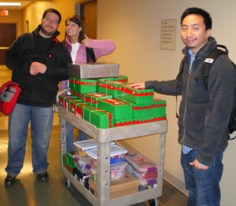 The school of Pharmacy recently collected 42 boxes for Operation Christmas Child. The boxes will be sent all over the world to children that do not receive Christmas presents.
The boxes contained a variety of presents for children between the ages of 2 and 14. Pharmacy students sent toys, race cars and dolls for the younger children and hygiene and beauty products for the older children.
“I think that this is a great project that will touch many children’s lives all over the world and show them the real reason that we celebrate Christmas,” said Christina Sudeen, a pharmacy student and participant in Operation Christmas Child. “I am glad that Belmont School of Pharmacy has participated in this project for the past two years, and I hope that it will be a tradition that the school will keep participating in for many years to come.”
PT and OT – Two of 10 Booming Jobs in America
What 10 careers on Money and PayScale.com’s list of America’s best jobs will see big opportunities, and what do hiring managers look for?
6. Physical Therapist
Best Jobs rank: 4
10-year growth: 30%
Median pay: $75,000
A greater focus on strength, wellness and preventative care has moved physical therapy into the mainstream. Now these specialists work with patients of all ages and ailments to improve their standard of health.
East Hartford, Conn.-based Preferred Therapy Solutions has 170 openings for those interested in working with patients who are suffering from disease or injury. A minimum of a bachelor’s degree is required — though a doctorate is recommended — along with all of the appropriate licenses. Just as important: A love for the job.
“I’m a non clinician, when I talk with someone to screen them, I’m looking for someone who can convey how much they enjoy being a physical therapist,” says employment and human resources director Linda Black.
“Someone that I hired gave me an example of the last patient she had treated and how thrilled she was that that patient was able to stand up on her own and walk down the hall and it brought tears to her eyes. It was catching, it was like maybe I should go back to school and become a PT.”
9. Occupational
Therapist
Best Jobs rank: 19
10-year growth: 26%
Median pay: $72,000
Yes degrees, experience and certification are vital to landing a job as an occupational therapist, but when it comes to helping those that suffer from a disabling condition, compassion is paramount.
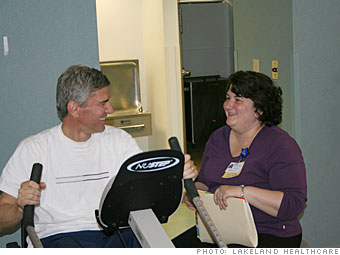
As such, Erin Wright, senior recruiter for Lakeland HealthCare, pays just as much attention to a job candidate’s social cues as she does their resume. “A lot of it is their tone,” she says. “The way they answer the telephone, you can hear it in their voice.”
To help screen candidates, she brings them into the office to see how they interact. “We do on-site interviews where they get to meet the team and throughout those interviews we are able to see if they were engaged,” says Wright. “Did they smile? Did they make eye contact?”

School of Nursing hosts dinner for scholarship recipients
 The School of Nursing at Belmont University recently honored recipients of the New Careers in Nursing (NCIN) Scholarship with a dinner to promote leadership and professionalism. The scholarships are funded by the Robert Woods Johnson Foundation to support underrepresented students in Belmont’s accelerated second degree nursing program. The event was organized by Dr. Anita Chesney and Dr. Carrie Harvey, who coordinate the scholarship program at Belmont. To date, the School of Nursing has received $200,000 in scholarship funds.
The event was attended by the NCIN grantees, as well as several community nurse leaders from the Nashville area. The distinguished guests shared their experiences and offered advice and opportunities to the scholarship recipients. Community nursing leaders from Tennessee Nurses Association (District 3), Sigma Theta Tau Nursing Honor Society, and Chi Eta Phi Nursing Sorority challenged the students to succeed and become involved in professional nursing organizations. Featured speakers included Richard Phidd, RN, BSN, and Laura Kelley, RN, MSN (pictured above), who serve as nurse managers at Vanderbilt University Medical Center.
Occupational Therapy Student Publishes Article in OT Practice
 Amanda L. Cobb, an occupational therapy doctoral student, had an article published in the Nov. 29 issue of OT Practice. The article, titled “Plotting Next Steps: Transitions for Adults with Developmental Disabilities,” provides two case studies of how occupational therapy helps individuals with developmental disabilities find meaningful occupation and greater independence. Amanda co-wrote the article with Melissa Y. Winkle, President of Dogwood Therapy Services.
Pharmacy Students Collect Food for Second Harvest
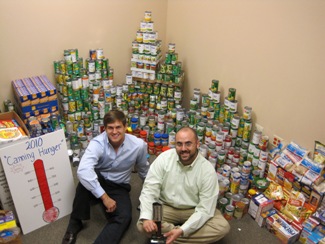 Students in the School of Pharmacy recent held a three-class competition to collect canned food items for Second Harvest Food Bank. The food drive took place Nov. 8- 19, and the students collected approximately 2,200 food items. The food drive was run as a competition between the first, second and third year classes in the School of Pharmacy with each cohort aiming to collect 300 non-perishable food items. The P3 class raised just over 300 items, the P1 class raised over 600 items, and the P2 class won the contest with just over 1,000 items. The items collected by the students were donated to Second Harvest Food Bank. The students also incorporated a “Faculty Challenge” in the contest, and the faculty donations were donated to St. Luke’s Community House.
Voight speaks to Swiss Sports Physiotherapitsts
 PT Professor Mike Voight was in Switzerland recently, serving as an invited keynote speaker for the Swiss Sports Physiotherapy annual meeting. His lecture was entitled “Current Concepts in Ankle Rehabilitation.” The meeting, held in Bern, saw over 400 sports therapists attend.
Nursing Students Awarded Project Blossom Award
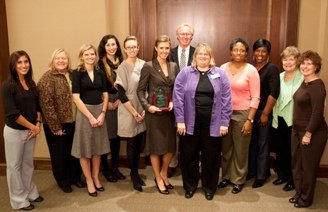 Belmont nursing students, along with associate professor Dr. Beth Youngblood, were recently awarded the 6th Annual Project Blossom Award by the Metro Department of Health. They received the award for serving as event planners and prenatal care teachers in the Teen Conference — a program for pregnant teens in the Davidson County school system — and for their work with the Incredible Baby Shower project. The Belmont group received the award at Nursing Excellence Night on Nov. 15 following the induction on new Sigma Theta Tau members.
Project Blossom is an initiative from the Governor’s office to decrease the state’s infant mortality rate. The award is given each year to an individual or group that plays a significant role in saving babies and eliminating prenatal disparities within Nashville and the Davidson County area.
In addition to their work with the Teen Conference and the Incredible Baby Shower, Belmont nursing students have also provided teaching to patients with babies at Centennial Medical Center, Stonecrest Medical Center, and the Hope Clinic of Nashville.
US News recognizes best careers of 2011
Students in occupational therapy, social work, nursing and physical therapy at Belmont University’s Gordon E. Inman College of Health Sciences & Nursing can expect great job prospects during the next decade, according to the US News report on the 50 Best Careers of 2011.
For more information check out the following links:
The 50 Best Careers of 2011
Best Careers 2011: Healthcare Jobs
Best Careers 2011: Occupational Therapist
Best Careers 2011: Medical and Public Health Social Worker
Best Careers 2011: Registered Nurse
Best Careers 2011: Physical Therapist
Disaster Simulation at Belmont University
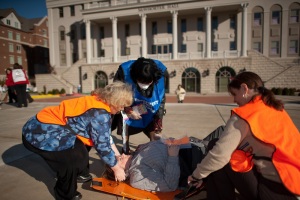 The disaster simulation drill featured as part of last month’s Tennessee Simulation Conference cosponsored by the Belmont University School of Nursing was featured recently in a Nashville Medical News article.
The article can be accessed directly at the Nashville Medical News website, but is also included below.
Collaborations and Conferences Push the Emerging Model
By: SHARON H. FITZGERALD
The scene would have been horrifying, if not for the posted signs that read “Disaster Drill in Progress.” Victims covered in faux blood were scattered on Belmont University sidewalks, stairs and lawns last month as nursing faculty from academic and hospital settings across Tennessee learned how such simulations better help their students learn.
The event was the third-annual Tennessee Simulation Conference, called “Practice, Practice, Practice! Patient Safety and Provider Performance,” held at Belmont’s College of Health Sciences & Nursing. Belmont boasts the Health Care Simulation Center, which has been recognized as a Laerdal Center of Education Excellence. That’s simulation education’s gold seal of approval. The two-day conference on Nov. 4-5 was preceded on Nov. 3 by a pre-conference at Vanderbilt University where participants new to simulation education learned the basics of setting up simulation programs at their institutions.
Just what is simulation education anyway? According to Beth Fentress Hallmark, PhD, RN, who is Belmont’s director of simulation, “A simulated clinical experience is anything that is not real. I hate to say that, but there are so many different components to it, from the actual pre-work that students have to do, to the simulation where they’re working in the lab or with a standardized patient. Because simulation is so new, we are really trying to define some of those terms.”
A “standardized patient” is an individual trained to play the role of someone who is ill or injured and that can certainly be a valuable learning tool. Yet, simulation may also be as simple as a nurse learning to administer an injection by substituting an orange for an arm. “It’s not just electronic simulators that we’re talking about,” Hallmark said, adding, “The most important portion of simulation is really the debriefing and the reflective thinking, where you sit around the table and you ‘unpack’ everything you’ve done.”
The seeds for the Tennessee Simulation Conference were sowed in 2006, when nursing education advocates across the state launched a full-fledged effort to apply for grant funding, Hallmark explained. They were successful, and the first conference at Belmont, entitled “Empowering Nurse Educators,” was held in 2008. Funding has come from a variety of sources, including the Community Foundation of Tennessee, the Tennessee Center for Nursing, Belmont, Vanderbilt and Austin Peay State University. Another financial source has been a national initiative by the Robert Wood Johnson and the Northwest Health Foundation. Called Partners Investing in Nursing’s Future, the national strategy was designed to establish a stable, adequate nursing workforce.
Today, the Tennessee Nursing Clinical Simulation Center is a website collaboration designed to help Tennessee nurse educators access the latest simulation resources. The site includes links to other websites, conferences, newsletters, presentations, journals and books, offering an in-depth look at what is practiced in the world of simulation today.
According to the website, “In today’s world of healthcare, we have learned simulation provides the learner a place safe from patient harm, helps the learner to increase confidence, and can provide the educator a means to make things happen, unlike clinical experiences. Educators are also learning that simulation education provides a format to teach teamwork.”
In fact, Hallmark’s presentation at last month’s conference focused on the importance of interdisciplinary cooperation in simulation education. “Not only is this going to be nursing, but we’re expanding this to include all disciplines. I’m working with physicians, EMTs, respiratory therapy, allied health, from the very top to the very bottom of the healthcare realm,” she said. She pointed to studies that now stress educating nurses “interprofessionally and not in those typical silos because the medical errors continue to occur.”
Still another Tennessee initiative is the new Tennessee Simulation Alliance, which held its inaugural meeting on Oct. 11 and met again in conjunction with the recent conference. Hallmark is the alliance’s program director, and she said the collaboration is multidisciplinary and involves healthcare professionals working together to ensure improved patient safety and the use of quality simulation scenarios. The alliance plans to partner with academia, industry, government and healthcare providers.
“In surgery, there’s still an increase in wrong-side surgeries or wrong-site surgeries. Isn’t that awful? We really feel like simulation is one way we can help with safety and communication and make sure that we are providing education for students before they get to the acute-care arena,” she said.
Hallmark said ongoing projects in Tennessee to further simulation include:
* Continued faculty education,
* An online “clinical placing system” database to help nursing schools find available simulation units they might use in hospitals, long-term care facilities and other institutions.
* Development of current nurses on a unit to act as clinical instructors.

PT Students volunteer again for Dierks Bentley event for Children’s Hospital
Despite heavy class loads, Belmont Physical Therapy students were still able to find time again this year to volunteer for the Dierks Bentley Miles and Music for Kids benefit concert. Bentley started the concert 5 years ago to raise money for children’s hospitals across the U.S.
This year, over 80 Belmont students volunteered in every aspect of the event, helping to make it a success according to Bentley. “I take a lot of pride in the volunteers from the School of Physical Therapy and in the fans,” he says, “because they are the ones raising the money.”
When all was said and done, the students helped to raise a total of $250,000 for Monroe Carell Jr. Children’s Hospital at Vanderbilt. A new record was also set when the annual motorcycle ride that coincided with the event saw over 1500 riders make the trip from Columbia, TN to Riverfront Park in Nashville to show support.
“Whether you have a kid or not,” Bentley continued, speaking about his own experiences with child health conditions, “when you go to a children’s hospital and you see what good they do, it moves you.”
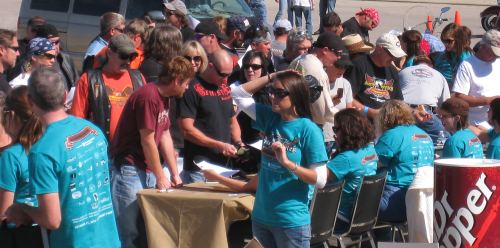
To see more photos for this event go to our Facebook page linked here.
Belmont’s new pharmacy featured on local news
 Belmont University’s new teaching pharmacy was recently featured on NewsChannel5 in Nashville. You can view the report at the NewsChannel5 website, with accompanying story below:
NASHVILLE, Tenn. – Belmont University is on the cutting edge of local medicine. The school is the only one in the state with its own pharmacy.
The fully operational pharmacy has two aims: to serve the campus community and train future pharmacists. The pharmacy is open to students, staff and the surrounding community.
The students are getting hands on experience right on campus, which is a program that’s the first of its kind here in the state.
Students and staff also get a deep discount of prescription medication. Some medicines are as much as 25-percent off.
University Administrators said the pharmacy has also become a major selling point to potential students.
Support the Upcoming Guatemala Mission Trip
 Once again this year, a group of students from the School of Physical Therapy, the School of Occupational Therapy, and the School of Nursing will be traveling to Guatemala over Spring Break for a missions trip. They are currently selling Christmas Ornaments as one of their fundraisers. They are for a wonderful cause and would be the perfect addition to your Christmas tree or make a great gift. They are only $8 and all the money goes towards the missions trip. Feel free to email Lacey Little at lacey.l.little@gmail.com with any questions.
PT’s Kevin Robinson helps Preds Star Improve His Slap Shot
Dr. Kevin Robinson from Belmont University’s School of Physical Therapy was featured this week in a story in Canada’s National Post about his work with Nashville Predators star Shea Weber to improve his slap shot. You can read the story on the National Post’s website, or see the full article below.
Sean Fitz-Gerald, National Post · Monday, Nov. 15, 2010
As a clinician and a professor of biomechanics who has worked with golfers and baseball players, Dr. Kevin Robinson was eager to apply science to a growing hockey legend. And that interest only grew after watching Shea Weber step into his first few slap shots after a recent practice.
It is a shot that ripped through an Olympic hockey net this year, leaving behind what one news agency described as “scorch marks” on the mesh. It moves with the ferocity that has reportedly broken bones in no fewer than four teammates while elevating Weber, a first-year captain of the Nashville Predators, into an object of childhood wonder.
“With that guy on skates,” Robinson said, “I was a dwarf.”
Robinson, who teaches at Belmont University in Nashville, Tenn., analyzed Weber’s shot last month with help from a digital camera and a computer program. He asked the 6-foot-4, 234-pound defenceman to take about a dozen shots in open ice, and asked the same of Predators teammates Jordin Tootoo and Cody Franson for the sake of comparison.
After taking the top of each player’s backswing as a starting point, Robinson assessed the speed with which each player met the puck. Weber and Tootoo had similar mechanics in their shots, with their sticks perpendicular and their left arms parallel to the ice at the top of the top of their swing, and each took about 0.2 seconds to get down to the puck.
The difference?
“One of them is 5-foot-8, and the other one’s 6-foot-4,” Robinson said. “One of them is swinging a bigger stick, so the angular velocity is much faster.”
Angular velocity is a measure of speed, of which Weber showed in abundance. Robinson recorded the 25-year-old with a speed of 715 degrees per second — which suggests that, if his torso was able to spin like a top, Weber could rip through two full rotations of his shot in about a second.
Tootoo was clocked in at 668 degrees per second with Franson in third, at 405.
“What that speaks to is the tremendous amount of core strength, the strength of his abdominals, the muscles that stabilize his trunk,” Robinson said. “That’s the only way you can pull that off.”
Weber, the son of a mill worker in the British Columbia interior, began to find fame with his shot during the NHL all-star weekend last year. He fired a shot that hit 103.4 mph during the skills competition, finishing second only to the Boston Bruins’ 6-foot-9 defenceman, Zdeno Chara (105.4 mph).
It was at the Winter Olympics in Vancouver where Weber’s ability began acquiring some of its mythical proportions. He sent a shot screaming in from the point in the second period of Canada’s qualification game against Germany, opening a hole in the back of the net and forcing officials to consult video review to confirm what they had missed.
Canada won in a romp, and Canadian fans found their new favourite weapon.
“I’d never seen anything like that happen on a stage like the Olympics,” Weber said with a chuckle. “It’s pretty neat to have kids come up to you when you go home and bring that up.”
It was at home, in Sicamous, B.C., where Weber first developed his shot. He always loved to shoot the puck, and spent countless summer hours hammering shots into a second-hand net off a sheet of plywood laid on the grass outside his home.
“I would wreck my sticks before anything else,” Weber said. “And Dad wasn’t too happy about that. Just try to put an extra bit of tape on it after that.”
He said he usually goes through at least one composite stick a game with the Predators, even though he estimates he really only gets an opportunity to unleash the full fury of his shot once every three or four games.
“It might come a bit in spurts,” he said. “It might go in back-to-back games, where you get an opportunity to really blast it, and then you’d go a few games where you don’t really even get a chance to shoot anything.”
Weber had never put much thought into the physics of his shot, focusing instead on the mechanics of his delivery. He used to position his hand closer to the blade when he was younger, but moved it higher as he grew older and stronger, to the point where it is now mostly muscle memory.
He takes at least 100 shots a week in practice.
“The biggest thing for me is weight transfer,” Weber said. “Obviously, it’s got to be in sequence with everything else: from the weight transfer to how you’re distributing your power from your back foot to your front foot and, obviously, leaning on your stick to get the stick to torque and whip.”
He has taken 50 shots through Nashville’s first 15 games this season, second to Atlanta’s Dustin Byfuglien (66) for most by a defenceman in the league. Weber has two goals and five assists, but struggled to regain his dominant form while defence partner Ryan Suter was sidelined for nine games with a lower body injury.
Being known for his shot can also work against Weber, when teams scheme to pin someone higher on the point when the Predators have the man advantage. That forces him off a shooting lane and into passing mode, where he has to defer to an open teammate.
And he has to be mindful of those teammates in practice, when he consciously dials down the force of his point shots, conceding he has “had some unfortunate luck over the past few years with hitting guys on our team.”
“He’s using what God gave him, his height and his strength,” Robinson said. “That’s what separates him there.”
That core strength comes from the abdominal muscles, which can be strengthened with a diet of crunches and work with a medicine ball. Muscles in the hindquarters also help to stabilize the pelvis, which — in baseball and golf, as well as in hockey — should move first in the series of movements leading up contact.
“If those are in sync,” Robinson said, “then what you have is a really efficient delivery of force.”
McWhorter Hall Wins National Award for ESa’s Design
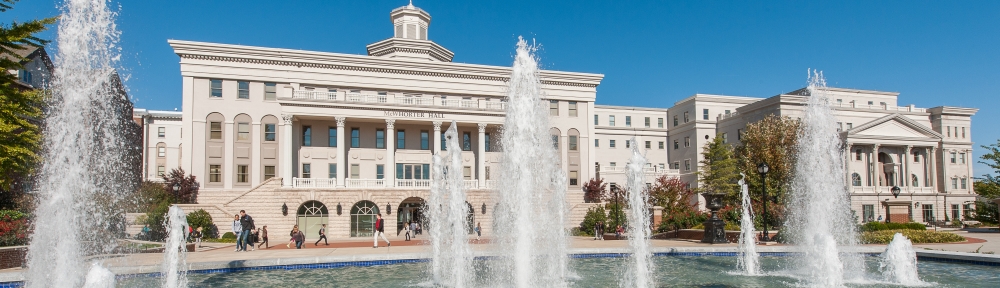
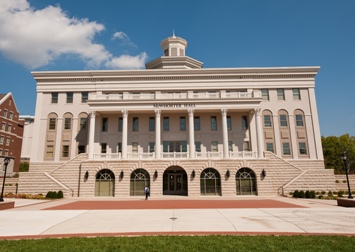 Belmont University’s McWhorter Hall—which houses the Schools of Pharmacy and Physical Therapy as well as the Department of Psychological Science—has received a Citation of Excellence Award in the national Learning By Design competition. The annual competition is sponsored by the National School Boards Association and Stratton Publishing and Marketing, Inc.
McWhorter Hall is one of 11 Citations of Excellence Award winners that were deemed the best in the nation by a recognized panel of architects and educational facility specialists. This facility and the other 10 winners will be published in the 20th Anniversary Spring 2011 edition of Learning By Design. Winners were chosen on the basis of innovative design and design excellence.
The academic building, designed by Earl Swensson Associates, Inc. (ESa), maintains the historical architectural style prevalent on the Belmont campus, while containing innovation for which the university has become known. Experiential learning spaces include a sophisticated, licensed campus pharmacy and a clinic that provide services to students, faculty and staff. Interdisciplinary simulation labs add futuristic dimensions to the programs taught within the facility.
Significant sustainable features designed into the building include a 20,000-gallon water storage tank that captures excess ground and storm water for recycling as a campus irrigation source. Surrounding the rooftop cupola are native Tennessee plants comprising the extensive green roof that reduces the urban “heat island effect,” thereby reducing heating/cooling costs. The roof continues Belmont’s efforts to be environmentally responsible. Hodgson & Douglas provided the landscape architectural design for the green roof. R.C. Mathews Contractor served as the project’s general contractor.
ESa, based in Nashville, is a 49-year-old architectural firm practicing throughout the U.S. and globally in the design areas of education, healthcare, hospitality, senior living, corporate office, and the arts & community. Other Belmont campus projects the firm has designed over the years include the recently completed Patton Hall/Bear House residence hall, Maple Hall, the Gordon E. Inman College of Health Sciences & Nursing Center, the Beaman Student Life Center/ Curb Event Center/Maddox Grand Atrium, Bill & Carole Troutt Theater, Leu Center for the Visual Arts and the Jack C. Massey Business Center.
McWhorter Hall Dedicated
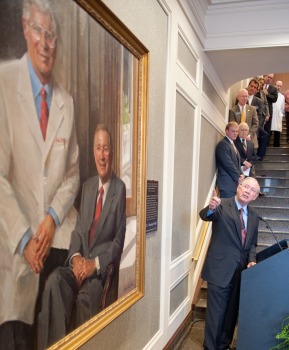 Governor Bredesen, others participate in ceremony honoring healthcare leader Clayton McWhorter and the late Fred McWhorter
Belmont University honored Clayton and Fred McWhorter Friday morning during the official dedication ceremony for the newly opened McWhorter Hall. The 90,000 square foot, state-of-the-art academic building houses the University’s Schools of Pharmacy and Physical Therapy, as well as the Department of Psychological Science. McWhorter Hall was named in honor of Belmont Trustee Emeritus and Chairman of Clayton Associates, Clayton McWhorter, and his brother, the late pharmacist Fred McWhorter. Both men dedicated their careers to the healthcare field, making a difference in the lives of countless individuals and championing healthcare reform.
In addition to Belmont President Dr. Bob Fisher and Board of Trustees Chairman Marty Dickens, others offering remarks included Tennessee Governor and longtime McWhorter family friend Phil Bredesen, SHOUTAmerica Executive Director Landon Gibbs and Clayton Associates President Stuart McWhorter, Clayton’s son.
While all the speakers remarked on Clayton McWhorter’s countless contributions to healthcare and the education of future generations, the event centered around Clayton’s brother Fred, who was a practicing pharmacist for more than 50 years. Clayton McWhorter said, “My brother Fred practiced pharmacy like it should be practiced and stayed true to his profession, loving every minute of it. I believe he would be honored to have this building bear the McWhorter name, but I’m even more hopeful that the student pharmacists and other health care specialists learning within these walls will look to my brother as a premier model of their profession.”
A portrait of the brothers, painted by noted artist Shane Neal, was unveiled at the ceremony along with a plaque of dedication: “I will consider the welfare of humanity and relief of suffering my primary concerns (Oath of a Pharmacist). This building is dedicated in honor of beloved healthcare leader Clayton McWhorter and his brother, longtime practicing pharmacist Fred McWhorter. May their example of professional knowledge, personal integrity, innovative leadership and tireless giving to their community and their patients inspire the many students who will walk these halls.”