
Dr. Ruby Dunlap’s Uganda Fulbright Blog
 This past Friday night, I dreamed I was a pizza box. My consciousness resided in part of the box lid; I felt the air move as my cardboard face fell downwards. Mefloquine can do that. I had forgotten to take it in the morning and rather than skip another dose as I inadvertently had the week before, I took it just before bedtime with consequences among those the inserts predict: vividly bizarre dreams.
Many of the expatriates here take no malaria prophylaxis at all and few Ugandans do. But malaria is endemic and dangerous; I helped a wobbly student walk to the front gate, get on a boda, and on to home a few weeks ago with a 3+ malaria raging in her system. Being stricken with recurrent bouts of malaria is what all Ugandans deal with as a matter of routine. It only takes one bite from one infected mosquito. Many sleep under mosquito nets; many do not. Dad refuses his mosquito net since it hampers him getting in and out of bed. I do not fuss since a fall and a broken bone are at least as risky for him as malaria and he is taking his malaria prophylaxis weekly.
Category Archives: School of Nursing
School of Nursing Awards Foundation Scholarships
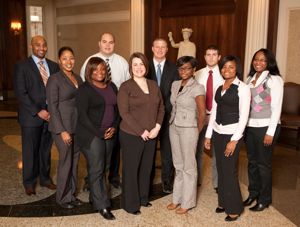 Ten new students to Belmont’s School of Nursing this Spring semester have been selected to receive a $10,000 New Careers in Nursing scholarship, funded by the Robert Wood Johnson Foundation. The New Careers in Nursing is a program designed to help alleviate the nursing shortage and increase diversity within the profession’s workforce. The scholarship program is designed for college graduates with non-nursing degrees to pursue a second bachelor’s degree like the accelerated nursing program at Belmont. The $100,000 grant helped Belmont’s School of Nursing increase student enrollment with a new spring cohort while expanding program admission from fall semester only to both fall and spring semesters.
Award preference is given to students from groups underrepresented in nursing or from disadvantaged backgrounds. Of the accelerated students beginning their program of study in January 2010, 23 percent are male, and 33 percent come from diverse racial and ethnic backgrounds. In comparison, national nursing workforce data indicate that men comprise only 5.8 percent of the American nursing workforce and racial/ethnic minorities comprise only 10.7 percent. Grant funding will be used by schools to help leverage support for new faculty resources and provide mentoring and leadership development resources to ensure successful program completion by scholarship recipients.
Belmont Nursing Grad serves aboard the USNS Comfort in Haiti
From WEAR ABC3 in Pensacola, Florida. . . .
A second wave of sailors bound for Haiti deployed from Pensacola Naval Hospital Wednesday. The group will be providing care to quake victims on a state-of-the-art hospital ship called the U.S.N.S. Comfort. Lieutenant Junior Grade Lauren Hudson shouldn’t be on this trip. She has already deployed once this year, but for this special mission, she asked to be a part of it. Hudson is a 2007 graduate of Belmont University’s School of Nursing.
“I felt kind of an emotional connection to Haiti because I had been there before, and I really just wanted to do something to help.” In fact, a sense of purpose fills many of the 25 people loading a bus for Jacksonville. From there, they’ll meet up with 10 other Pensacola sailors on board the U.S.N.S. Comfort, a floating hospital tasked with caring for the earthquake survivors.
“It’s pretty amazing what it can do and how many people it can hold.” The 1,000-bed ship will carry more than 500 staff members, 35 of which will be from Pensacola. A team that commanders say includes many volunteers. “Our corpsmen are superior, bar-none, so we have a great team. And I look forward to the mission.” They’ll each have their own way of dealing with the devastation around them. “I don’t think you can ever be totally prepared for this. You just kind of got to stop yourself from over-thinking and stop, take a deep breath.”
The bus is loaded with 25 people heading over to Haiti, but that’s only a fourth of what’s deployed around the world from Naval Hospital Pensacola. A round of applause for the latest departing staff, and the hopes for a successful mission. The sailors were not given a definite timetable for a return home. We’re told it could take anywhere from one to six months.
College of Health Sciences to host civil rights pioneer, Fred Gray
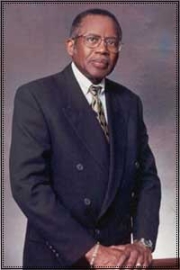 Noted Civil Rights attorney and minister Fred Gray will appear on Belmont’s campus on Wed., Jan. 20 for a special forum and lecture. Gray—the former attorney for Rosa Parks, Rev. Martin Luther King, Jr. and the Tuskegee Syphilis Study victims—will discuss “Lessons Learned from a Civil Rights Pioneer about Health, Social Justice and Christian Service.” This morning-long event is free and open to the public, courtesy of financial assistance provided by the Jacob G. Schmidlapp Trusts, Fifth Third Bank, Trustee. Both the forum and the lecture will take place in Belmont’s Massey Performing Arts Center.
Belmont President Dr. Bob Fisher said, “It’s a distinct honor to welcome Fred Gray to Belmont’s campus, especially during the week when our nation celebrates the accomplishments of Rev. Martin Luther King, Jr. and the Civil Rights movement. At Belmont we encourage our students to use their gifts and talents to impact the world. There are few better examples of individuals who have accomplished that mission than Fred Gray.”
The event will begin with an 8:30 a.m. panel discussion featuring Gray along with the following special guests:
• Dr. Henry Foster, Jr., professor emeritus and former dean of the Meharry College School of Medicine and nominee for U.S. Surgeon General under President Bill Clinton
• Dwight Lewis, columnist and member of the editorial board for The Tennessean
• John Seigenthaler, founding editorial director of USA Today, founder of the First Amendment Center and award-winning journalist who briefly left his career in the 1960s to work in the civil rights field.
Following a 20-minute intermission at the conclusion of the panel forum, Gray will return for a keynote lecture at 10 a.m. His presentation will conclude with a question-and-answer session.
Tommy Thompson Diagnoses the Healthcare Debate
Article from Nashville Medical News
Politics in Play
 Tommy Thompson, four-term Governor of Wisconsin and former Secretary of the U. S. Department of Health and Human Services, recently painted a scenario of political intrigue filled with back room bargaining and deal-making worthy of the latest political best seller. However, he wasn’t speaking of a fictional thriller but of the real life maneuvers that will be necessary to get a healthcare reform bill out of Congress.
Speaking at Belmont University a week before Thanksgiving, he predicted that Congress would pass a new, comprehensive healthcare bill, but not without some Congressional arm twisting, “and a lot of shootouts and deal cutting” before reaching a “cantankerous” compromise.
“The president wants the healthcare bill out. Nancy Pelosi wants it out. Harry Reid wants it out,” he explained, of the push to move quickly. Thompson added that, for Democrats, the specter of “what happened in 1994 with the Clintons’ attempt at healthcare reform hangs over their heads.”
The briefing, part of Belmont University’s continuing speaker series, Diagnosing Our Future, was held at the university’s Gordon E. Inman Center.
Belmont Nursing Graduate Honored
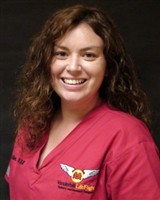 Kelley Allen, Nurse for the Neonatal Transport Team at Monroe Carell Jr. Children’s Hospital at Vanderbilt, has been recognized by Cambridge Who’s Who for demonstrating dedication, leadership and excellence in nursing. Allen received her Bachelor of Science in Nursing from Belmont University in 2002
As the charge nurse for the neonatal transport team at Monroe Carell Jr. Children’s Hospital at Vanderbilt, Ms. Allen is responsible for supervising the team, overseeing nurses during orientation, credentialing and quality control, and managing bedside care in the neonatal intensive care unit and for babies in need of medical care at outside facilities. She enjoys specializing in caring for babies. In 2004 and 2005, she was the president and vice president of the Middle Tennessee Association of Neonatal Nurses and participated in We Care for Kids Day at Vanderbilt Children’s Hospital for the past three years. Ms. Allen takes pride in her team, the neonatal transport team, being certified as air medical transport professionals. She attributes her success to her parents who instilled in her a great work ethic and taught her to give her best efforts at all times.
Currently pursuing her Master’s Degree in Neonatal Nursing, Ms. Allen also received a Bachelor of Science in Biology from Lipscomb University in 1996. A certified CPR instructor and NRP instructor, she is a member of the Middle Tennessee Nurse Practitioner Association and the Middle Tennessee Association of Neonatal Nurses. She hopes to become a nurse practitioner and continue working at Vanderbilt Children’s Hospital in the transport field. She would also like to work as a liaison for quality control and safety for the transport team.
How silently, how silently, the wondrous Gift is given!
Dr. Ruby Dunlap’s Uganda Fulbright Blog
 We hope you had a Merry Christmas and Happy New Year, family and friends!
We celebrated Christmas in Uganda this year, five of us. Daughter Amy and son-in-law, Chris, arrived mid-December and returned to the U.S. on January 2. Dad Wesselhoeft and we arrived here August 14. On Christmas Day, we will had been here 134 days. The day after Christmas, December 26, was exactly the halfway point for our stay here. We are missing so many things about our lives in the U.S. that we will be looking forward to May 11 when we expect to return.
The September semester was very busy for me and had lots of adjustments for all of us. January semester will be another busy one with classes every day of the week until the end of the month. Then there will be lots of paper grading as students email me assignments.
We did have a very fun visit to Uganda’s largest game reserve, Murchison Falls, last week. We saw awesome waterfalls and many animals. In the photo above are the five of us pointing to Uganda in central eastern Africa on a big globe in front of the Nile River at Murchison Falls.
Left to right, Carl Wesselhoeft, Chris Sutton, Amy Sutton, Ruby Dunlap, Bob Dunlap
See a more photos of that trip by clicking below.
“I Don’t Want my Nurse to Quote Shakespeare”
Dr. Ruby Dunlap’s Uganda Fulbright Blog
Nurses in Uganda, like nurses in the United States, are struggling with questions of professional identity and what or even whether a bachelor’s degree in nursing adds to the nurse enough to justify its additional expense, time, and academic labor. “I don’t want my nurse to quote Shakespeare,” said a non-nurse friend, “I just want her to give me my shot.” We were discussing whether nursing education should include humanities. I’ve forgotten the friend who said this; the comment has stuck in my memory, an iconic summary of all such questioning about what it means to be a nurse and what entails an appropriate education for such a profession.
“I Would Teach for Free”
Dr. Ruby Dunlap’s Uganda Fulbright Blog
 “I would teach for free but they have to pay me to grade papers.” This comment from a teacher friend was naturalized long ago into my habitual outlook on things and without any difficulty whatsoever. I have been and continue to be grading, or “marking” as they call it here, papers, what seems like hundreds of them, weeks on end now. I know that “hundreds” is a hallucination of a paper-fevered brain but there have been and are being lots. Grading graduate nursing papers, all of which have been written by students for whom English is not their first language, has turned out to be not that different from grading nursing papers by students in the U.S. for whom English is their mother tongue. Having to grade the papers turns out to be our students’ revenge for us assigning so many of them.
In Tommy Thompson’s scenario, health reform passes this year
 From Erin Lawley of the Nashville Post. . . .
In a lively presentation at Belmont University Monday afternoon, Former U.S. Department of Health and Human Services Secretary Tommy Thompson discussed the potential future of health reform legislation currently before Congress.
Thompson said he expects a bill will be on President Obama’s desk before Christmas. That bill will include a public option, health insurance exchanges, taxes for people who make more than $200,000 per year, taxes on so-called “Cadillac” health plans, and employer credits for wellness and prevention programs.
Click here to read the full article.
“We Tremble Not For Him”
Dr. Ruby Dunlap’s Uganda Fulbright Blog
 What did I expect the most trusted and skilled exorcist in the Mukono area to look like? Perhaps a fierce intensity out of the eyes? Perhaps either wildly careless or flamboyant clothing? In any case, his speech should be full of emotionally charged religious utterances, something befitting regular contact with the world of demons and evil spirits. That world, which few Westerners are likely to take seriously, the world relegated to a tiny minority of secretive devotees in the West, is taken very seriously in Uganda and by the vast majority of Ugandans. When it is taken that seriously by the locals, expatriates do well to attend seriously to it as well. Here is a not unusual bit in another of Uganda’s English newspapers, the 9 November, 2009, issue of The Daily Monitor:
Masaka man accused of witchcraft
Residents of Kijjomanyi Village in Kalungu Sub-county in Masaka District on Friday burnt the house of a 72 year old man and killed his goats, accusing him of bewitching them. The residents accused Mr. Felix Ssali of using spirits to kill 15 people between June and August. The district police chief, Mr. Moses Mwanga, said investigations are ongoing.
School of Nursing Hosts Simulation Conference
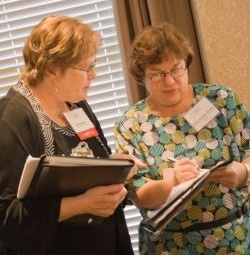 Nearly 150 educators and hospital administrators from Tennessee and various other states attended the second annual Tennessee Nursing Simulation Conference at Belmont University last weekend. The conference was presented by Belmont’s School of Nursing and The Community Foundation of Middle Tennessee through a grant from the Partners Investing in Nursing’s Future – a collaborative initiative of the Robert Wood Johnson Foundation and the Northwest Health Foundation.
The conference theme was Education and Practice: Working Together to Improve Patient Outcomes and included over 40 sessions which covered all aspects of medical simulation. The conference was designed to provide a comprehensive overview of simulation technology and resources and to build communication networks for educators in Tennessee. Conference faculty included nationally renowned experts on simulation technology in healthcare education and training from such institutions as Vanderbilt University, Vanderbilt Medical Center, Monroe Carell Jr. Children’s Hospital, Fort Sanders Regional Hospital, Austin Peay State University, Maury Regional Medical Center, Union University, University of Kentucky School of Nursing, Tennessee Center for Nursing and Belmont University.
Belmont’s Gordon E. Inman Center and Healthcare Simulation Center provided excellent facilities for the conference, with comfortable meeting rooms and state-of-the-art laboratories and simulation mannequins. The Gordon E. Inman College of Health Sciences and Nursing is a Laerdal Center of Educational Excellence for simulation, one of only 12 such centers designated in the United States. Also featured were demonstrations by several companies, including Laerdal, METI, Elsevier, Pocket Nurse, and Kyoto Kagaku, all which specialize in the latest simulation equipment and accessories.
4 of The 14 Best Jobs in America
Money magazine recently published a list of The 50 Best Jobs in America which bodes well for graduates of the Gordon E. Inman College of Health Sciences & Nursing. Four of the top 14 jobs were careers for which our students are preparing. The 4th best job in America was a Nurse Practitioner. At #7 was a Physical Therapist. At #13 was a Pharmacist. And at #14 was an Occupational Therapist. With doctoral programs in Physical Therapy, Pharmacy and Occupational Therapy, and master’s programs in Family Nurse Practitioner and Occupational Therapy, Belmont is well positioned to prepare students for some of the best jobs in the 21st century.
In the companion lists to The 50 Best Jobs in America, Physical Therapist was ranked as the 8th best position for job growth with a 27% increase in opportunities expected during the next 10 years for 181,000 total jobs. Physical Therapist was ranked 2nd for low stress with 59.5% of those surveyed saying their job is low stress. Occupational Therapist was ranked 9th for low stress with 50% saying their job is low stress. 97.3% of those nurse practitioners surveyed said their job was secure ranking Nurse Practioner as the 4th best for job security. Physical Therapist also made the job security list at #8 with 96% saying their job is secure. Nurse Practitioner was #7 on the list for future job growth and #6 on the list for job satisfaction. Occupational Therapist came in at #10 for job satisfaction. And finally, Nurse Practioner was ranked as 9th best for those who think their job makes the world a better place.
See more at http://money.cnn.com/magazines/moneymag/bestjobs/2009/.
Nursing student also excels on the soccer field
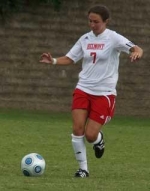 Jayme Trocino, a junior nursing student, was featured recently in a story in Nashville’s City Paper on balancing her coursework with her position on the Belmont women’s soccer team – leading the Lady Bruins to a share of the Atlantic Sun Conference regular-season title this fall. In the article, Trocino is quoted, “Some places they won’t let athletes be in the nursing program because of the time it takes. That’s one of the reasons I’m so thankful to be here. … It can be difficult but my coaches and my teammates have inspired me.”
Click here read the full article.
Tommy Thompson to Speak at Belmont
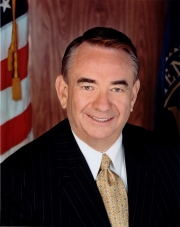 Former Secretary of the U.S. Department of Health and Human Services, Tommy Thompson, will be on campus Monday, November 16, 2009 at 4:00 p.m. for a Healthcare Reform Briefing: How Will Reform Impact Providers, Payors and Individuals? An RSVP is required, but admission is free compliments of Medical Reimbursements of America, who is co-sponsoring this event with Clayton Associates, the Nashville Health Care Council, and the Gordon E. Inman College of Health Sciences & Nursing. The lecture is part of the Gordon E. Inman College of Health Sciences & Nursing Diagnosing Our Future Speaker Series.
Look on the Speaker Series webpage for upcoming presentations in the speaker series with Fred Gray on January 20, 2010 and Dr. David Williams on March 25, 2010.
Belmont Tops Out New Health Science Building, Home for Schools of Pharmacy and Physical Therapy Ceremony celebrates completion of $30 million building’s frame
 Nearly one year after breaking ground, Belmont University celebrated the “topping out” its new $30 million health sciences building last week, which will serve as the future home for the School of Pharmacy, a Belmont program which welcomed its second class this fall. The building, which has an anticipated completion date of June 2010, will also house the School of Physical Therapy and will include expansion space for the Schools of Nursing and Occupational Therapy as well as the Social Work and Psychology programs. (Click here to view a photo of gallery of the event.)
Belmont President Dr. Bob Fisher said, “In addition to providing a time to celebrate and thank all the workers behind this immense project, a topping out is also a time to look forward to when this structure is complete. This building will be a model, 21st century academic facility, providing a venue where our students and faculty resources can intersect in service to help meet the medical needs of our community and our world.”
Iganga Bob
Dr. Ruby Dunlap’s Uganda Fulbright Blog
 The non-verbal expression, “eh,” is most consistently noticeable in North America among English speakers dwelling near and around the U.S.-Canadian border. It shares company with such verbal expressions as “you bet!” a response so characteristic of the area that when an agricultural expert from Minnesota answered a question with it recently, I couldn’t help but smile with memories of miles of northern forests and lakes riding in on the coattails of “you bet!”
My own southeastern United States, on the other hand, is known for the spoken elaboration of multiple syllables into words which are written with only one. One of my favorite examples was from a patient who asked me, “Can you give me a nerve pill—I’m fixin’ to have a spell.” I hadn’t realized before that moment how many syllables a southern woman could put into the word “spell.” Practice saying, “Spay–ee—ell” and you’ll get an approximation. Make sure you draw it out to communicate adequately the threatened onset of something most dire.
Nursing Professor Leads the Way in Safe Patient Handling
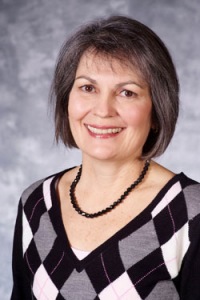 Not many a day goes by that Lynne Shores doesn‟t influence lives in the nursing world. As a college professor, author, lecturer and community advocate for more than 30 years, she has helped educate and direct the energy of thousands of registered nurses who care for today‟s patients. And, she has played a key role introducing hospitals and universities to safe patient handling instruction.
“Someone once told me, I have the passion and patience needed for working with beginning nursing students,” explained Shores. “It‟s true. I love to see that fire ignited when a student does well!” To that end, Shores served as Belmont University‟s representative at ANA‟s Safe Patient Handling Conference five years ago. Learning about new research and state-of-the-art lift equipment energized her to tackle the neglected topic of safety in nursing instruction. And, it granted her the chance to work with peers at ANA and NIOSH (National Institute for Occupational Safety and Health) to implement core curriculum for teaching students about on-the-job safety. Currently, Shores serves on the National Advisory Committee for the newly launched ANA Safe Patient Handling Recognition Program.
Those Nurses
Dr. Ruby Dunlap’s Ugunda Fulbright Blog
 Along the stone retaining wall outside our apartment is a row of snowy white daylilies. That is, I call them daylilies because of their leaf, stem and bud shapes. If not actually a daylily, they must be close kin to the daylily tribe. The flowers start out as a daylily bloom, a suggestion of a white trumpet on a slender stalk. But then the Designer of this flower changed His mind. Instead of the expected trumpet shape, the flower turns into a loose fringe of white, the petals going abruptly from wide to narrow in a graceful drape. I do not know which gives me more pleasure, the recognition of a familiar plant type or an unexpected variation in that type. This daylily illustrates my conviction that our appreciation of diversity needs to be anchored in an appreciation of unity. Otherwise, diversity becomes mere difference and mere difference seems to me to degenerate easily into competitive hostility among differences.
Gov. Bredesen, U.S. Rep. Cooper Lead Healthcare Conversation at Belmont
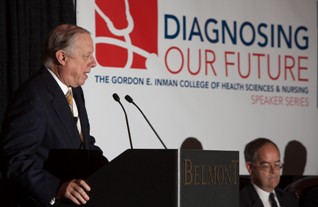 Tennessee Governor Phil Bredesen and U.S. Representative Jim Cooper provided the keynote addresses for “Diagnosing Our Future,” the inaugural presentation in Belmont University’s Gordon E. Inman College of Health Science & Nursing Speaker Series. The event was held on October 13 in the Frist Lecture Hall in the Inman Center on Belmont University’s campus.
The theme of the speaker series, “Diagnosing Our Future,” reflects the call to collaboratively advance new ideas to improve healthcare and healthy living for future generations. The purpose of the series is to connect these ideas with the greater community of Nashville and Middle Tennessee and with students in Belmont’s health science programs who are preparing to serve society as physical therapists, pharmacists, registered nurses, nurse practitioners, occupational therapists, and social workers.
Nursing Professor Recognized as a Health Care Hero
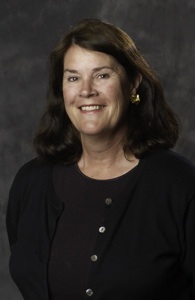 The Nashville Business Journal recently honored professor Jane Shelby as one of the 2009 Health Care Heroes in Middle Tennessee. Shelby is a professor of nursing and the former director of the university’s undergraduate nursing program.
“I am very honored and humbled by this award,” said Shelby. “It really is not an award for me personally but for all the faculty and staff in the School of Nursing who work so hard to prepare our students for their profession.”
Shelby was recognized in the “Behind the Scenes” category along with other local leaders, including Aileen Katcher of Katcher, Vaughn and Bailey Public Relations, Julie Warner from the Matthew Walker Comprehensive Health Center and Jonathan Uttz from Psychiatric Solutions. This was the third annual luncheon to “help celebrate the accomplishments of the leaders, innovators, strategists and caretakers, whose work is helping to grow the region’s health care industry and reinforcing Nashville as the health care capital of the nation.”
Belmont Board Member R. Clayton McWhorter receives award for service
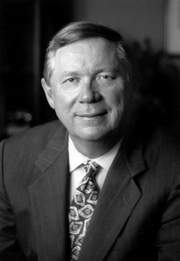 R. Clayton McWhorter has been named the recipient of the Community Foundation of Middle Tennessee’s 16th annual Joe Kraft Humanitarian Award. McWhorter, a businessman and former health-care professional, serves as chairman of the board for PharmMD, and he is on the board of trustees for Belmont University.
The Maid Escaped Mid-Term
Dr. Ruby Dunlap’s Uganda Fulbright Blog
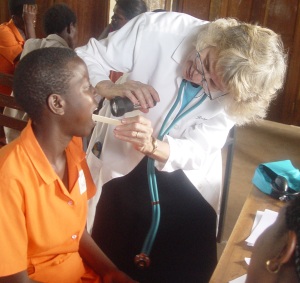 As Dad and I walk down to the track most mornings around 6:30 AM for exercise, we meet many elementary school children in neat uniforms headed for school. They walk purposefully and soberly but their faces break out into smiles as we greet them. “Good morning,” Dad says, “God bless you. God loves you. Have a good day at school.” And they beam with pleasure, receiving the gift as Dad intended to give it.
We see children outside the campus headed for school in deep purple, bright pink, yellow, orange or green uniforms. The effect is of a moving flower garden. The imagination fast-forwards 5 years, 10 years, and one wonders what kind of man or woman each child will be father or mother of and what kind of world today’s fathers and mothers will leave tomorrow’s. I especially wondered this as I spent a day this week doing school physicals on 43 girls ages 13 to 20 at a secondary boarding school.
Madame Janet visits Mityana
Dr. Ruby Dunlap’s Uganda Fulbright Blog
Uganda’s premier English language newspaper, The New Vision, had this article with the headline, “MEDICAL STAFF ABANDON HOSPITAL IN MITYANA” in the 23 September issue, page 7.
Over 40 medical workers in Mityana Hospital on Monday morning abandoned work, leaving 400 patients unattended to.
The workers went to attend a court session where their four colleagues were charged with manslaughter following the death of a pregnant woman in labor.
Sources in the hospital said workers reportedly agreed not to return to work unless their colleagues were granted bail.
Nurses Jane Nanfuka, Agnes Namirembe, Joy Namutebi and Dorris Nalwanga allegedly refused to attend to Sylvia Nalubowa and her unborn baby last month.
The hospital administrator, Charles Luzira, said the medical workers were not on strike but were only showing solidarity to their colleagues and would return to the hospital after the court session.
The nurses were backed by officials from the national midwives and nurses association.
Chief magistrate Justine Atukwasa granted the accused bail of sh200,000 each which they paid. She then ordered them to return to court on October 6.
I say “Mattress,” you say “Matt-er-ess.”
Dr. Ruby Dunlap’s Uganda Fulbright Blog
 “Does the U.S. have a big problem with culture?” asked Eva, her small face full of concern. We had just finished reading and discussing Wellman’s chapter on “The Diverse Learning Needs of Students” in the 2009 Billings’ textbook on Teaching in Nursing. The “problem” in this chapter (pp. 21-22) is expressed partly as a catalogue of failures, failure to recruit sufficient minority nursing students and nursing faculty, failure to adequately support the minority student, etc. “Well, children in the U.S. go to similar schools,” I said, “and almost all of us speak the same language. We do have some cultural issues but I don’t think we have a ‘big problem’ with culture. What about Uganda?”
“Oh, all children in Uganda learn English from the beginning,” she said, taking her cue from me. “We don’t have a big problem with culture in Uganda.” (See photo of Eva, the young woman wearing the black sweater. Christine is busy at the computer in front of Eva who is speaking with Keren.)